
Search
2944 items matching your search terms.
In memoriam: Bruno Abegg
We mourn the loss of Bruno Abegg, who passed away on 20 July 2026 at the age of 61. He gave a crucial impetus to the first climate projects at CIPRA International.
News
Policy Brief: Extraordinary compliance procedure regarding deregulation measures to accelerate the deployment of renewable energy
This policy brief includes CIPRA International’s conclusions regarding the implementation of the RED III in compliance with the Alpine Convention, summarises the key findings of the report and outlines possible courses of action for each of the findings in a concise manner.
Position
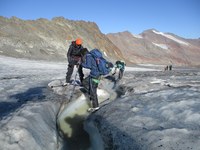
Youths explored melting glaciers in Tyrol
Experiencing science, mountaineering and art around a Tyrolean glacier: With Girls* on Ice Austria, nine youths* aged between 15 and 17 years had the opportunity to take part in a free expedition.
Press/Media release
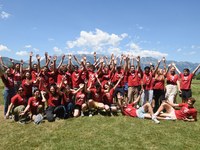
To the limits and beyond, sustainably: YOALIN kicks off the summer
With its kick-off event in Liechtenstein, YOALIN has launched a new season, with some 40 young people from the Alpine region gathering to learn more about climate-friendly travel, ecological networking, and sustainable mobility. Since 2018, the CIPRA project has been connecting young people who want to explore the Alps sustainably.
News
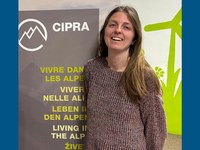
Point of View: What if reaching an agreement isn’t the most important thing?
In the increasingly contested Alpine region, harmonious coexistence does not depend on eliminating conflicts. Rather, we must learn to recognise differing opinions, highlight areas of tension and use dialogue as the basis for a shared future, argues Lauren Mosdale, co-director of CIPRA France.
News
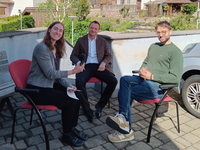
Leaving home, staying connected
Over the course of a year and a half, the OUT4INGOV project focused on the issue of youth migration in the Alps and implemented innovative measures in the three pilot regions of Maribor (Slovenia), Trentino (Italy) and Vesoul (France). The project concluded in mid-July 2026 with a conference in France.
News
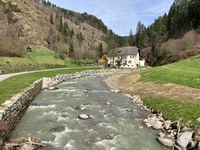
Combining flood protection and nature-based solutions
In the FLOW-BIOS project, five biosphere reserves are working together with the University of Natural Resources and Life Sciences, Vienna, and CIPRA International to explore how nature-based solutions can be successfully implemented on privately owned land.
News
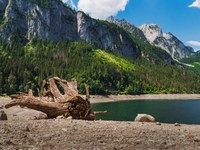
The Alps are drying up
Record temperatures were already being recorded in many regions as early as June 2026, with further heatwaves following in July and early August. The consequences: water shortages, more frequent forest fires and unusual natural phenomena.
News
YOALIN Community MeetUp
Hike from Chamrousse to the Lacs Achard and talks about Sustainable Mobility in the Alps.
CIPRA Event
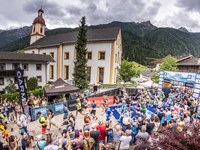
Trail running events in the Alps: how much is too much?
Whether around Mont Blanc, the Zugspitze or the Grossglockner, or through the Dolomites: trail running events are booming across the Alps. At this year’s UTMB alone, around 10,000 runners are expected to take part in various races and categories. However, the sport’s growing popularity also brings with it problems for the natural environment and small mountain communities.
News
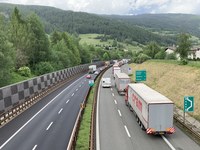
ECJ Advocate General criticises driving bans on the Brenner Pass
Regulating lorry traffic, yes; driving bans, no: this is the view put forward by the Advocate General of the European Court of Justice (ECJ) in his Opinion published in mid-July 2026. Although not legally binding, this forms an important basis for the decision in the legal dispute between Austria and Italy. CIPRA is calling on politicians on both sides of the Brenner Pass to engage in constructive dialogue.
News
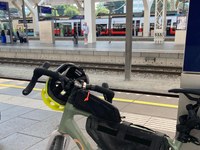
Car-free trips to the mountains
Anyone wishing to travel to the mountains in a climate-friendly way is finding an increasing amount of digital support. New platforms in France and Italy now complement existing services and make it easier to travel by train and bus to enjoy mountain tours.
News
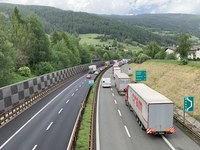
Interim ruling in the legal dispute over Alpine transit
On 16 July 2026, the Advocate General of the Court of Justice of the European Union (CJEU) delivered his Opinion in the legal dispute between Italy and Austria concerning trans-Alpine freight transport via the Brenner Pass. This Opinion is regarded as an important guide to the subsequent judgment, which is expected to be handed down by the end of the year.
Press/Media release
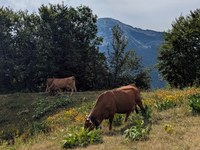
The Specificities of Generational Renewal in French Alpine Agriculture
Given that 2026 has been declared the International Year of Rangelands and Pastoralists by the United Nations, and that pastoralism is a key component of Alpine identity, CIPRA France conducted an exploratory study on the following topic: the specific characteristics of generational renewal in French Alpine agriculture.
CIPRA Project
The Olympic and Paralympic Games – French Alps 2030: A Battle of narratives concerning Mountain areas?
The topic of the 2030 Winter Olympics is causing conflicts among stakeholders in the French Alps, which often revolve around public consultation and social acceptance of this type of sporting event. Several environmental and civic NGOs have taken up the issue by quantifying the ecological impacts or by developing arguments regarding the socio-economic impacts—whether favorable or unfavorable to the sustainable development of mountain regions — as a basis for dialogue with public authorities. Factually, there has been no public consultation process as such, but rather an objective announced by the government to “build together” within existing bodies such as the Massif committees, without questioning the hosting of the 2030 Winter Olympics in the French Alps.
CIPRA Project
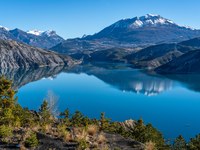
Water governance in mountain regions: what about high-altitude reservoirs?
Water governance and water management in mountain regions have been a focus for the CIPRA network for many years, with past and upcoming events on this topic. Acting as Europe’s water towers, the Alps supply water to thousands of people and irrigate the fields and industries of some of the EU’s most dynamic regions. Natural water-related risks (whether from excess or shortage) and the measures devised by local communities to mitigate them are at the heart of this study.
CIPRA Project
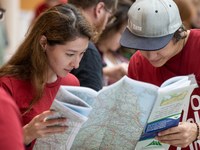
Alpine Youth on the Move
The “Alpine Youth on the Move” project strengthens young people's participation in topics such as sustainability, mobility, and political processes. Young people plan and organize activities and gatherings for a community.
CIPRA Project
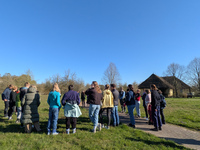
Youth workshop on biodiversity
What is the Intergovernmental Science-Policy Platform on Biodiversity and Ecosystem Services (IPBES) all about? Alexandra Senn can tell us more about it. She is a member of the CIPRA Youth Council and participated in an international workshop on the latest IPBES report.
News
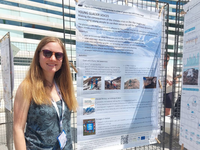
“Young Glacier Voices” presented at the Forum Alpinum
Félicie Weiss, part of the project Young Glacier Voices as representant from the partner organisation Girls* on Ice Austria, participated to the Forum Alpinum 2026. We asked her a few questions about her experience.
News
Webinar: Too much water, too little water
The project H2Opportunities invites you to a free webinar exploring water extremes: too much and too little. The webinar combines scientific insights with practical examples and offers interactive Q&A sessions for direct exchange with the speakers.
CIPRA Event
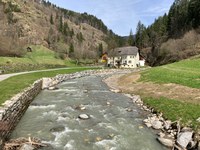
FLOW-BIOS
Nature-based solutions play a vital role in addressing the rising risk of flooding across the Alps, but this requires land that is often privately owned. That is why the FLOW-BIOS project, in collaboration with Austrian and Swiss UNESCO biosphere reserves, is investigating how nature-based solutions can be successfully implemented on private land.
CIPRA Project
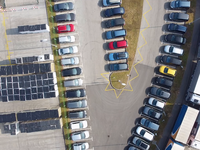
BIZ Mobility - Mobility of business and industrial zones for improved connectivity of peripheral areas
BIZ Mobility is an international cooperation project aimed at improving mobility and accessibility in business and industrial zones located in rural and peripheral areas. The project addresses a common challenge across Central Europe: many employment areas remain heavily dependent on private car use, while sustainable and accessible alternatives for daily commuting are often limited.
CIPRA Project
GLACIERS EXPLAINED: Science behind the melting ice
This Info Sheet is based on the “Glaciers Explained” webinar with Vanda Bonardo, Miha Pavšek and Marco Giardino.
CIPRA Publication
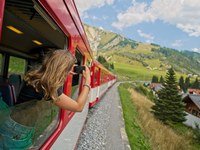
70 opportunities for climate-friendly adventures through the Alps
Travelling with a clear conscience and a strong sense of community: the project YOALIN is launching its next round in 2026 and is giving away 70 tickets for a climate-friendly trip through the Alps. Networking is also a key focus – winners will become part of an active community and will be invited to events in various Alpine countries. Applications are open until 7th of June!
Press/Media release
Get things rolling - Moving mobility forward in the Alps
CIPRAs Annual Conference on 16 and 17 October 2026 in Bolzano/IT. How much private and transit traffic can the Alpine region actually cope with? And who pays the price? More traffic does not only mean convenience, freedom of choice and economic dynamism, but also more noise, poorer air quality, land consumption and a profound impact on the daily lives of local people. Whilst visitors, goods and commuters cover ever greater distances at ever greater speeds, a good quality of life, peace and space are becoming increasingly scarce in the “Alpine transit corridor”. Furthermore, more roads and railway lines are cutting through wildlife habitats.
CIPRA Event
AlpPlan side-event in Aosta as part of the Forum Alpinum 2026
Guiding question: “What role can spatial planning take to mitigate the effect, glacier melt has on the landscape, territory and communities?”
Event
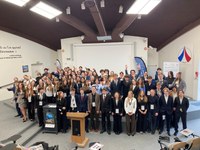
20 years of the Youth Parliament
Turbines in drinking water and solar panels on dams: with these and other ideas, the Youth Parliament to the Alpine Convention, which met in the French city of Chamonix in mid-March 2026, aims to strengthen climate resilience in the Alps.
News
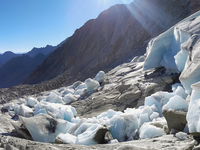
Collapsing Alpine glaciers
Austria’s ice giants are shrinking rapidly and literally crumbling away; Germany will soon be ice-free. Research shows that retreating glaciers mean we are losing not only water reservoirs, but also archives of human history.
News

Point of view: The good traveller leaves no traces
Traffic jams, noise, exhaust fumes: this problem affects not only densely populated urban centres but, owing to the still overwhelmingly dominant share of motorised transport, also the Alpine regions. Yet we have long known that there is another way, says Stephan Tischler, transport scientist at the University of Innsbruck and Chair of CIPRA Austria.
News
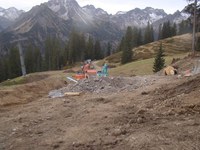
Drastische Folgen für die Natur am Fellhorn - Modernisierungsgesetz hebelt Naturschutzstandards aus
Der geplante Ausbau von Skiliften, Pisten und Beschneiungsanlagen am Fellhorn steht exemplarisch für eine besorgniserregende Entwicklung im Alpenraum: Naturschutzrechtliche Standards werden durch „Entbürokratisierung“ und „Beschleunigung“ übergangen und Beteiligungsprozesse eingeschränkt. Mit dem Argument eines „überragenden öffentlichen Interesses“ wird der Bau von Freizeitanlagen über den Schutz von hochsensiblen Ökosystemen der Alpen gestellt.