Milano-Cortina 2026: Fair play? Not a chance!
Artificial snow, traffic, concrete, fossil fuel sponsorship: numerous fouls were committed against nature before and during the 2026 Winter Olympics – and were also the subject of media coverage.

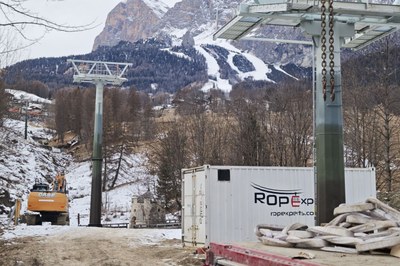
Several billion euros flowed into the construction industry for the 2026 Winter Games: despite all the promises of sustainability, a new bobsleigh track was cemented into the forest, a gondola lift was built in a landslide zone, slopes were dug up with excavators, and forests were sacrificed for reservoir basins. One of the few positive aspects for nature was that, for the first time, the Winter Games were held in a decentralised manner so that fewer new sports facilities had to be built. Nevertheless, according to calculations, Milano-Cortina 2026 produced more than 900,000 tonnes of CO2. The largest share of this was attributable to spectator travel, with the rest coming from the planning and execution of the competitions and construction projects. Added to this is 1.3 million tonnes of CO2 from sponsorship by the fossil fuel industry, such as the oil company ENI, the car manufacturer Stellantis, and the airline ITA Airways. The fact that winter sports are digging their own grave with fossil fuel sponsors was criticised in a petition submitted to the IOC by athletes that attracted over 20,000 signatures.
Use of artificial snow despite water shortages
The climate crisis is making it even more difficult to host the Winter Games: by the middle of the century, only 52 of the current 93 venues will still be viable and, without the use of artificial snow, only four will remain. For Milano-Cortina 2026 alone, four new reservoirs were built and a total of 2.4 million cubic metres of artificial snow was produced. The water for this, which is already scarce in the dry southern Alps, came from alpine springs and rivers. The cost of these Winter Games rose from a planned 1.5 billion to 5.7 billion euros, a sum that will ultimately be paid by taxpayers. In addition, rising property prices in Cortina and Milan, for example, are exacerbating social inequality. In 2030, the Winter Olympics will take place in the French Alps. There, NGOs are calling for more transparency and citizen participation.
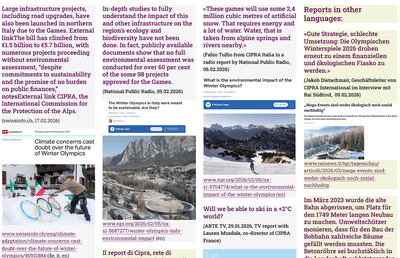
Selected media reports on the 2026 Winter Olympics – CIPRA as a committed voice for sustainable Alpine policy: https://www.cipra.org/en/dossiers/the-winter-olympics/media-coverage-of-milano-cortina-2026
Podcast on Milano-Cortina 2026
What impact did the 2026 Winter Olympics have on the Italian Alps? What is their legacy for local communities? And what lessons should the organisers of the next Winter Olympics in the French Alps in 2030 learn from this? We explore these questions in the latest episode of our podcast:
Sources and further information:
www.snpambiente.it/pubblicazioni/consumo-di-suolo-dinamiche-territoriali-e-servizi-ecosistemici-edizione-2025/ (it), www.sgr.org.uk/publications/olympics-torched (en), www.libera.it/it-schede-2792-open_olympics_2026_il_terzo_report_di_monitoraggio_civico, www.uibk.ac.at/de/newsroom/2026/zwischen-klimaschutz-und-schneesicherheit-die-zukunft-der-olympi/ (it), www.quarks.de/umwelt/klimawandel/olympischen-winterspiele-klimawandel/ (en), www.olympics.com/de/news/olympische-winterspiele-franzosische-alpen-2023-alles-was-sie-daruber-wissen-mussen (en), www.theguardian.com/sport/2026/feb/22/the-great-olympic-lie-untold-story-of-winter-games-huge-environmental-impact (en), www.derstandard.at/story/3000000309451/gebaut-gerodet-gruengewaschen-wie-nachhaltig-sind-die-olympischen-spiele (de), www.zdfheute.de/sport/olympia-2026-skispringen-schanzen-weisse-elefanten-predazzo-100.html (de)
Further information
Media coverage of Milano-Cortina 2026