
Act now to protect forests: sign the #HandsOffNature petition!
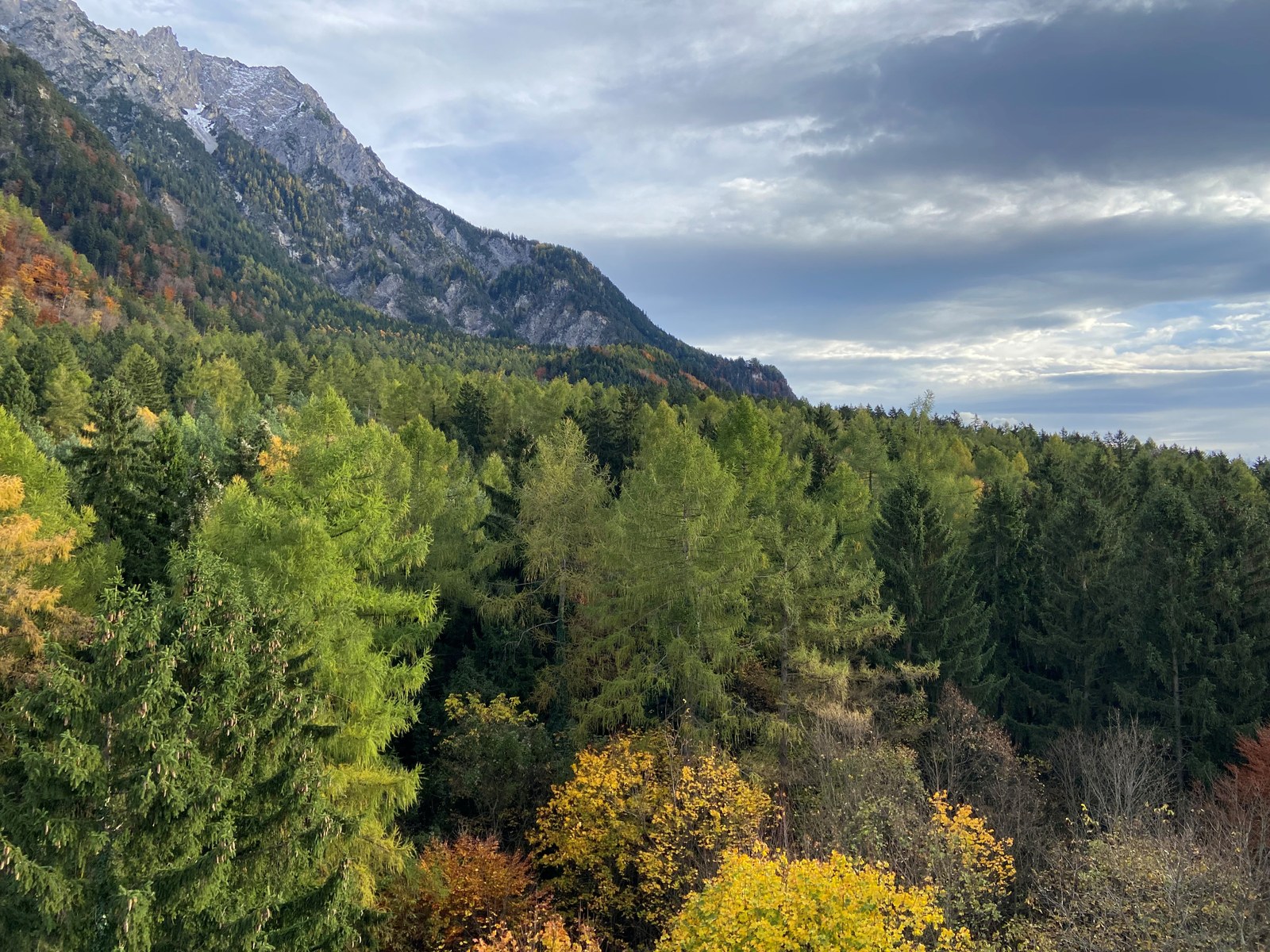
More than 40 percent of the Alpine region is covered by forests. They are not only a defining feature of the landscape, but also a cornerstone of Alpine livelihood, providing building materials, supporting biodiversity, and delivering essential ecosystem services.

Who is CIPRA?
Find out more!
More articles
alpMedia | Schaan, LI
Kick-off for a new alpine media house
The "Las-Alps Infoteca" project was launched at the end of April in Chur/CH. In the coming five years, a competence centre will be established for media products that are relevant to the Alps. The project will be realized in two phases: in the first phase the focus will be on the provision of media products, in the second the centre will also produce and market its own products.
alpMedia | Schaan, LI
New web page with information on visitor centres throughout the Alps
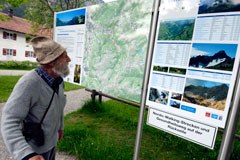
A new page has recently been added to the web site of alparc - the network of protected areas in the Alps - for those who want an overview of the many visitor centres in the Alps.
Linking-up the German roads for animals and for a better traffic safety
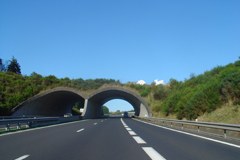
The German Government is developing a National Connectivity Programme which foresees to build wild animal crossings at the most important sites of migrating corridors. This year the first systematic research on ecological corridors in Germany has been finished, representing an important scientific groundwork for the implementation of the Programme.
alpMedia | Schaan, LI
Towards happy shrinking
Always more - the world will become better and better as long as material well-being grows. Nobody asks what this costs…until the system collapses. The present financial and economic crisis is giving us a taste of it. The Alps are now among the losers, but could be among the winners if they rise to the challenge. Must growth in principle be rejected?
Events
|
Local Peaks, Global Learning | online | |
|
Transhumance as Intangible Cultural Heritage of Humanity: A Way Forward? | MUCEM, Marseille/France | |
|
Growing alternative crops for new market opportunities in a changing climate | Vienna/Austria | |
|
Trento Film Festival | Santa Croce street, 67; I-38122 Trento | |
|
ForumAlpinum 2026 | Aosta |
Projects

CIPRA International Lab
PlurAlps
[Project completed] The Alpine area is experiencing the combined challenges of an ageing population and new migration models. At the same time, opportunities for social innovation and development arise from increasing cultural diversity and pluralism. Mountainous and peripheral Alpine municipalities and regions are specifically concerned and need technical support and new approaches to develop a welcoming culture, which should be credibly embraced and implemented by municipalities, SMEs and civil society.
CIPRA International
BeeAware!
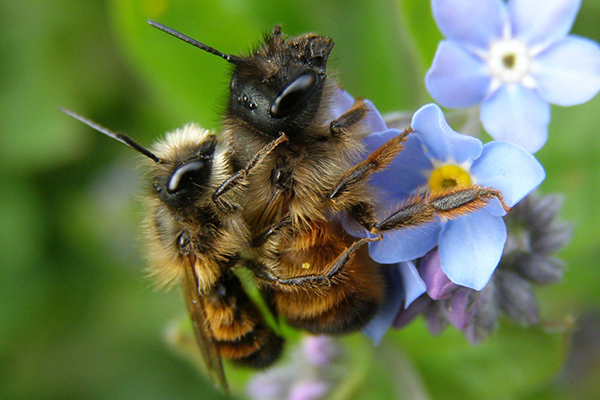
[Project completed] The aim of the project BeeAware! is to inspire communities in the Alps for bee protection and thus to improve the livelihoods of honey and wild bees. Bees are depending on an intact biodiversity. The different bee species need different plants, nesting and drinking places in order to survive. Integral bee protection therefore means securing, improving and enlarging the habitat of these important pollinators.
CIPRA International
GaYA
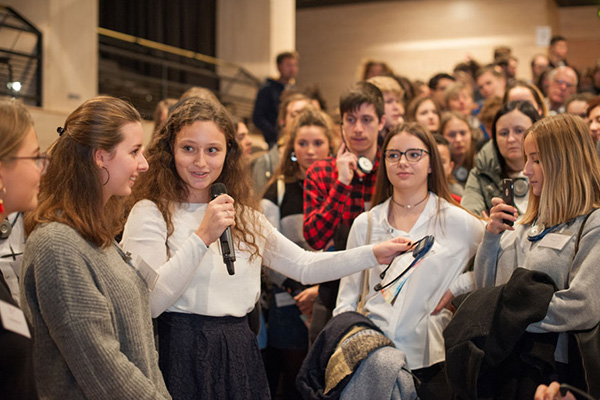
[Project completed] Governance and youth in the Alps - Young people tend to leave the Alpine space because they lack personal and professional fulfilment. Furthermore a majority of decision-makers remain unaware of the benefits a young active population brings to society.