
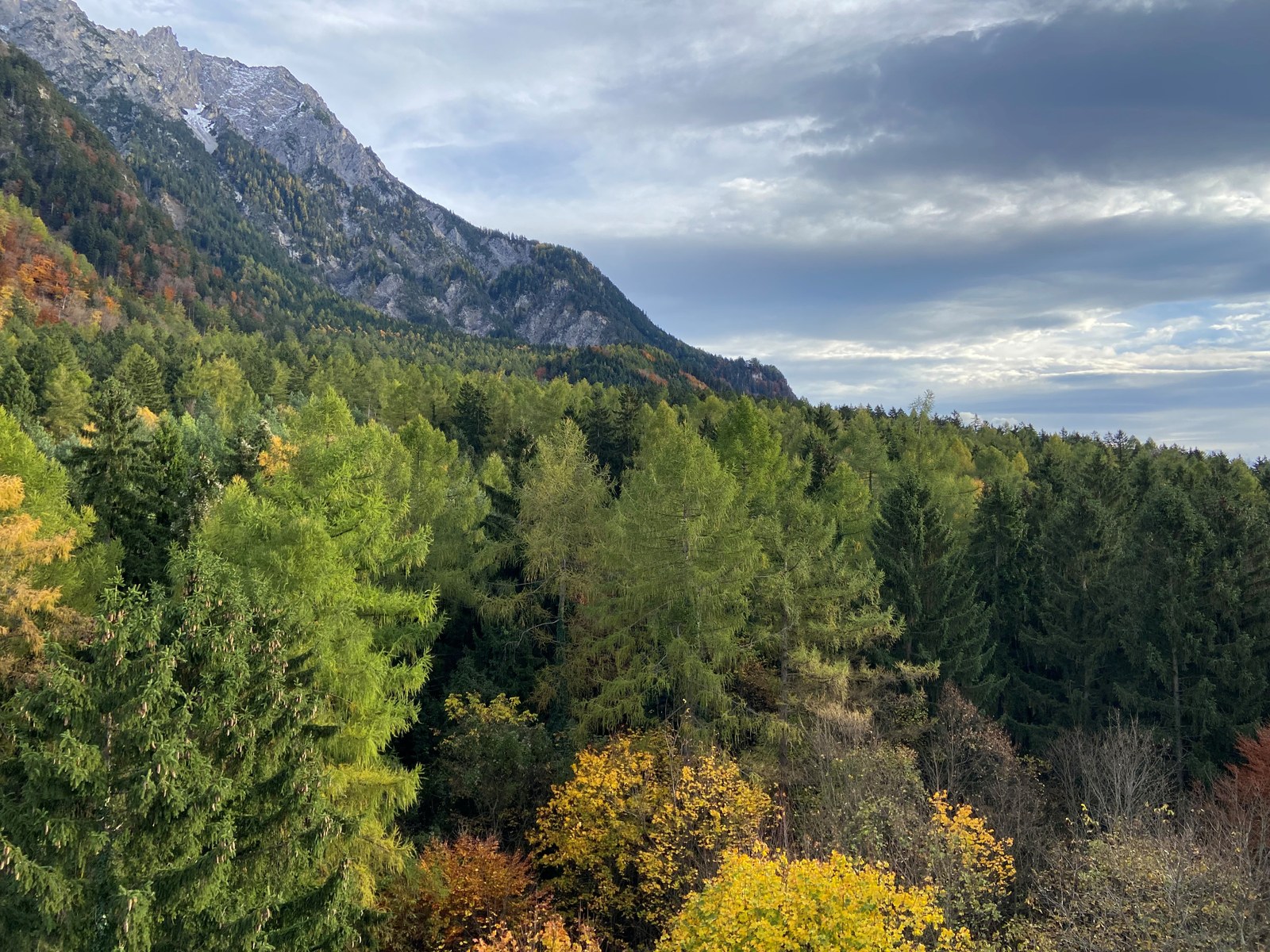
Act now to protect forests: sign the #HandsOffNature petition!
More than 40 percent of the Alpine region is covered by forests. They are not only a defining feature of the landscape, but also a cornerstone of Alpine livelihood, providing building materials, supporting biodiversity, and delivering essential ecosystem services.

Who is CIPRA?
Find out more!
More articles
alpMedia | Schaan, LI
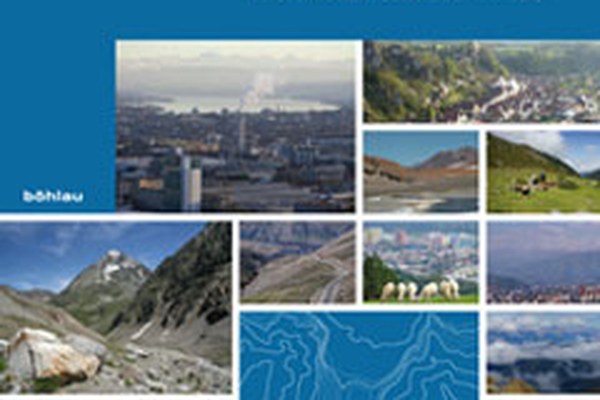
Publication on the challenges facing mountain regions
The Institute for Mountain Research at Innsbruck University/A has published a book on man and the environment in mountain areas under the English original title Challenges for Mountain Regions - Tackling Complexity. Besides the Alps it also examines mountain areas in the Andes and Patagonia.
CIPRA Internationale Alpenschutzkommission | Schaan, LI
cc.alps showcases future mobility in the Alps
In September CIPRA focused on the issue of sustainable mobility and transport as part of cc.alps and co-organised two events on these topics.
CIPRA Internationale Alpenschutzkommission | Schaan, LI
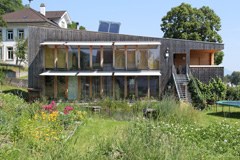
climalp video: living in a plus-energy house
CIPRA's climalp project demonstrates that energy-efficient houses built using regionally sourced timber are highly beneficial when it comes to living comfort, the climate, and the regional economy. A recent video featuring the single-family home of the Götz family built in Switzerland's Rhine valley in 2004 illustrates what sustainable, climate-friendly building can look like in practice.
CIPRA Internationale Alpenschutzkommission | Schaan, LI
Power plant expansion on the Lech at the expense of nature conservation?
The Lech river in Bavaria/D is already being used on a massive scale for electricity generation, and only the stretch at Augsburg/D remains undeveloped. But even this section of the river could very soon become the site of a hydroelectric power plant. The expansion plans are not an isolated case; rather, they reflect a trend throughout the Alps, and one that is gathering momentum.
Events
|
Local Peaks, Global Learning | online | |
|
Transhumance as Intangible Cultural Heritage of Humanity: A Way Forward? | MUCEM, Marseille/France | |
|
Growing alternative crops for new market opportunities in a changing climate | Vienna/Austria | |
|
Trento Film Festival | Santa Croce street, 67; I-38122 Trento | |
|
ForumAlpinum 2026 | Aosta |
Projects
CIPRA International
Living Labs
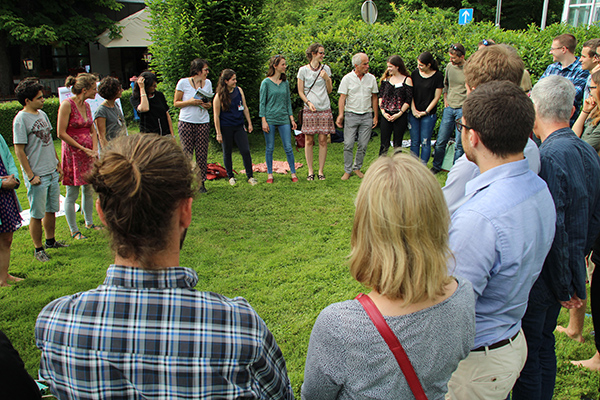
[Project completed] The project “Living Labs” brought together people of different ages from different Alpine countries to work together on process and know-how on selected topics. The project approach was participative and based on the principles of co-creation between young talents aged 18-30 years, environmental NGOs, civil society and politicians. The participants of this intergenerational project are committed to the sustainable development of the Alps at local, national and international level. For a desirable future it is important to set the right course today and to talk about how existing natural resources can be used sustainably.
CIPRA International | CIPRA Deutschland | CIPRA France | CIPRA Italia | CIPRA Slovenija
Sustainable Alpine Tourism
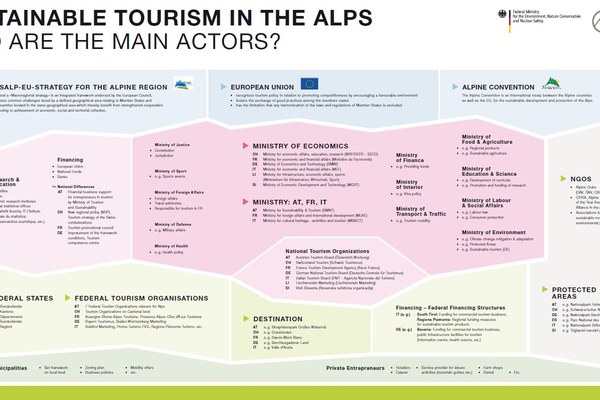
[Project completed] Sustainable tourism in the Alps is the only long-term alternative to conventional mass tourism in order to safeguard the habitat for nature and people. So far, however, there is a lack of jointly defined framework conditions on anational or alpine level for planning, promoting and implementing sustainable tourism.
CIPRA International
Cross-border mobility
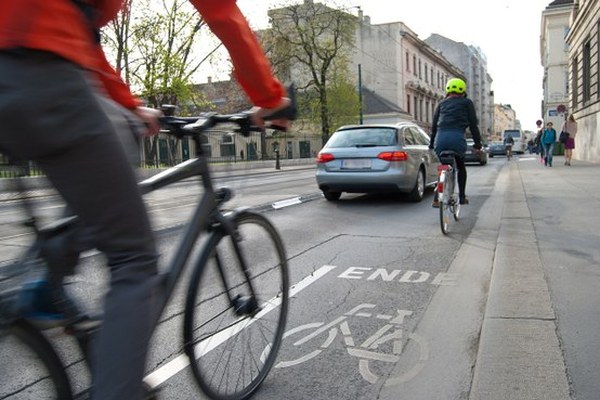
[Project completed] Tens of thousands of commuters move across national borders every day in the Alpine region. Existing traffic routes, however, were mostly built with a purely national perspective and are not geared to cross-border commuter flows. The result is overloaded roads, noise and pollution for local residents.