
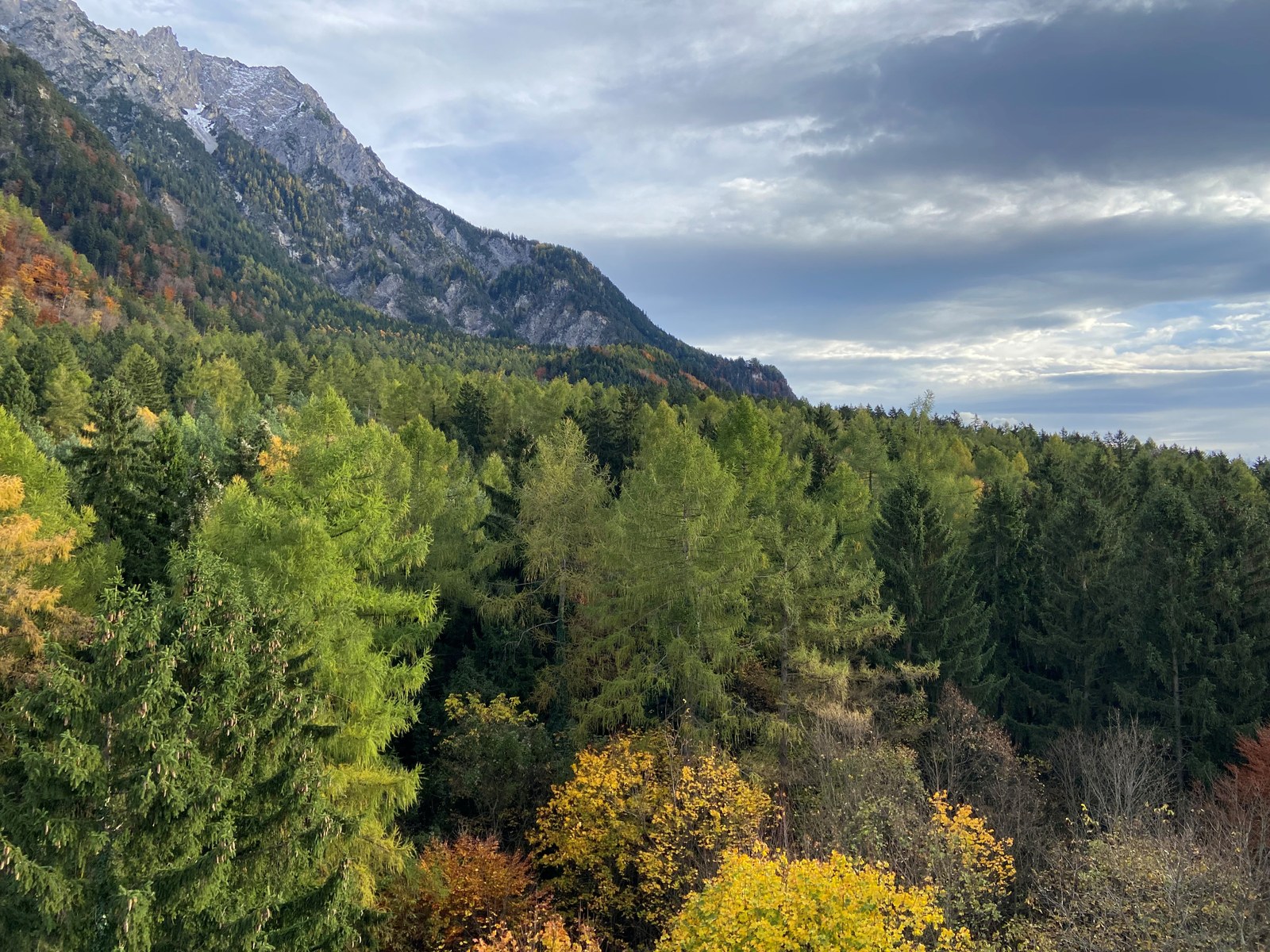
Act now to protect forests: sign the #HandsOffNature petition!
More than 40 percent of the Alpine region is covered by forests. They are not only a defining feature of the landscape, but also a cornerstone of Alpine livelihood, providing building materials, supporting biodiversity, and delivering essential ecosystem services.

Who is CIPRA?
Find out more!
More articles
CIPRA Internationale Alpenschutzkommission | Schaan, LI
Better ecological corridors and fewer accidents involving animals on Swiss roads
The Federal Council has drawn positive conclusions as regards the status of ecological corridors in Switzerland. A pilot project has tested how to successfully reduce collisions between animals and cars. The upcoming research field of landscape genetics provides new insights for the planning and implementation of ecological networks.
CIPRA Internationale Alpenschutzkommission | Schaan, LI
France paves the way for its green and blue infrastructure
After more than a year of discussions, France officially established its "trame verte et bleue" ecological network with the publication of a decree at the end of 2012. This Alpine country now has legal rules on how to define and implement its green and blue infrastructure.
CIPRA Internationale Alpenschutzkommission | Schaan, LI
Win-win for nature, economy and society: more green infrastructure throughout Europe
Since May the countries of the European Union have received guidelines on how to promote green infrastructure. The European Commission has adopted its strategy on this topic with the aim of better integrating natural processes into spatial planning and strengthening the benefits of intact ecosystems for the economy and society. In addition, Natura2000 and Emerald sites have been further recognized as major elements in an ecological network.
CIPRA Internationale Alpenschutzkommission | Schaan, LI
Alpine Convention strengthens co-operation between neighbouring countries
With its new presidency, the "Ecological Network" Platform of the Alpine Convention is now continuing its work. In focus over the next two years are cross-border co-operation between neighbouring states and activities in the pilot regions.
Events
|
Webinar: The journey of water | online | |
|
XIV European Mountain Convention | Sallanches / France | |
|
Alps in Motion: new Alpine-wide Day of Action | alpswide | |
|
Symposium 2: Vernacular Buildings in the Anthropocene | Austrian Academy of Sciences, Vienna (Austria) |
Projects

CIPRA International Lab
PlurAlps
[Project completed] The Alpine area is experiencing the combined challenges of an ageing population and new migration models. At the same time, opportunities for social innovation and development arise from increasing cultural diversity and pluralism. Mountainous and peripheral Alpine municipalities and regions are specifically concerned and need technical support and new approaches to develop a welcoming culture, which should be credibly embraced and implemented by municipalities, SMEs and civil society.
CIPRA International
BeeAware!
[Project completed] The aim of the project BeeAware! is to inspire communities in the Alps for bee protection and thus to improve the livelihoods of honey and wild bees. Bees are depending on an intact biodiversity. The different bee species need different plants, nesting and drinking places in order to survive. Integral bee protection therefore means securing, improving and enlarging the habitat of these important pollinators.
CIPRA International
GaYA
[Project completed] Governance and youth in the Alps - Young people tend to leave the Alpine space because they lack personal and professional fulfilment. Furthermore a majority of decision-makers remain unaware of the benefits a young active population brings to society.