
Articles
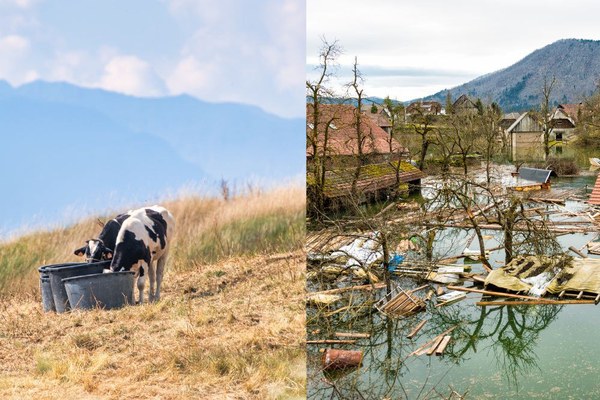
Climate risks: better to prepare than to wait
Early warning systems for heavy rainfall, prediction models for droughts: the MultiBios project, completed in April 2025, saw biosphere parks from German-speaking countries sharing their experiences in dealing with climate risks. A research team investigated their role in natural hazard management.
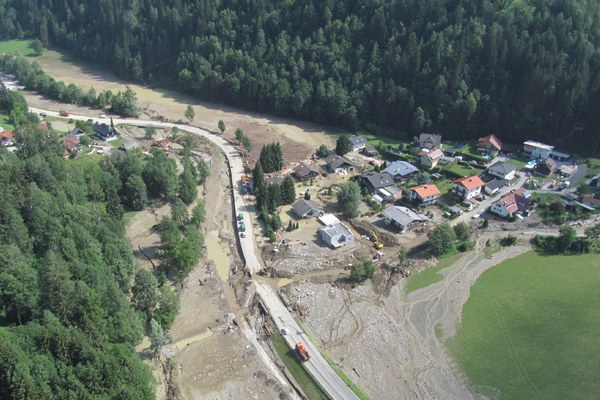
After the flood
What role could biosphere reserves play in dealing with climate risks? This was the subject of an international workshop organised by the MultiBios project in Bad Kleinkirchheim/A at the beginning of April 2024, which included a site visit to the Gegendtal valley that was affected by heavy rainfall and flooding two years ago.
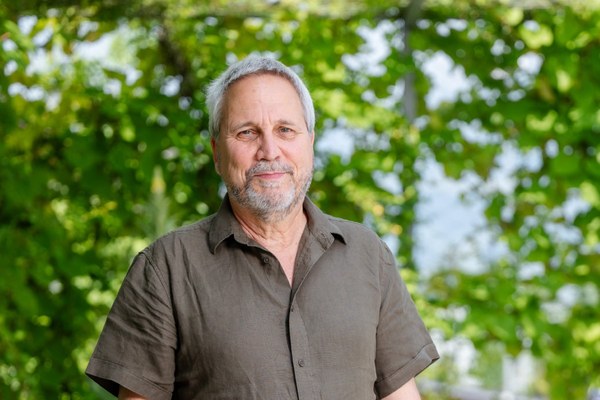
Point of view: European elections 2024: why a Swiss citizen would also like to vote
Switzerland’s referendum-based democracy has pitfalls of its own when it comes to environmental and climate policy. There needs to be an overarching corrective, such as neighbouring countries have in their constitutional courts and through the legal institutions of the EU, says Kaspar Schuler – as a Swiss citizen and Executive Director of CIPRA International.

Climate protection becomes a human right
A legal milestone for climate protection: on 9 April 2024, the European Court of Human Rights (ECtHR) ruled that Switzerland is violating the human rights of older women because the country is not doing what is necessary to combat global warming.
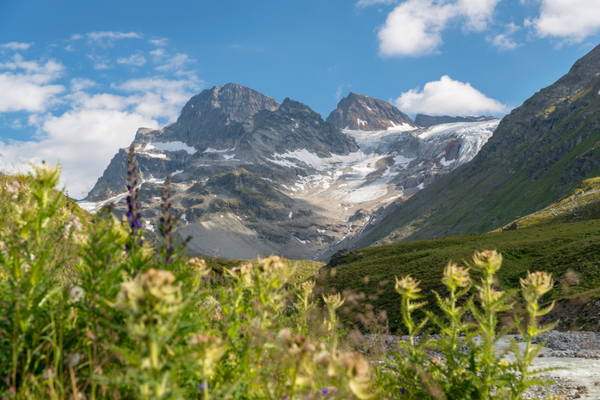
Experience the last of the glaciers
Recharge your batteries, go cycling, visit the glaciers: the Alpine Climate Camps project combines mountain sports with climate protection, further encouraging young climate activists. A bicycle tour in Austria at the beginning of September 2023 and other activities in Switzerland and Italy will draw attention to the disappearing glaciers.
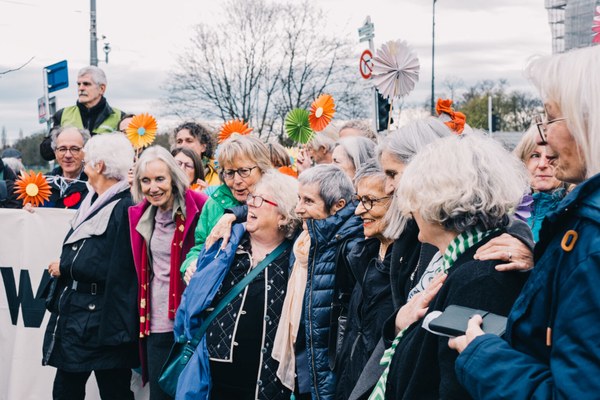
Lawsuits and laws for climate protection
Climate protection laws define clear climate targets, but for many the measures set out are insufficient. Climate lawsuits are increasing political pressure in the Alpine countries.
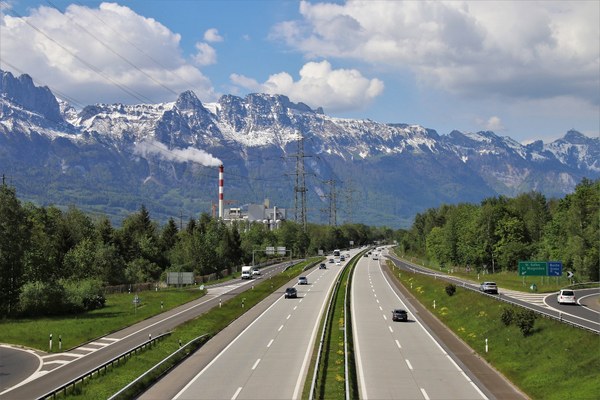
Hidden CO2 emitters
Climate protection measures are expensive, which is why they are regularly criticised and rejected. How then can it be that at the same time the Alpine states are spending billions on environmentally harmful subsidies?
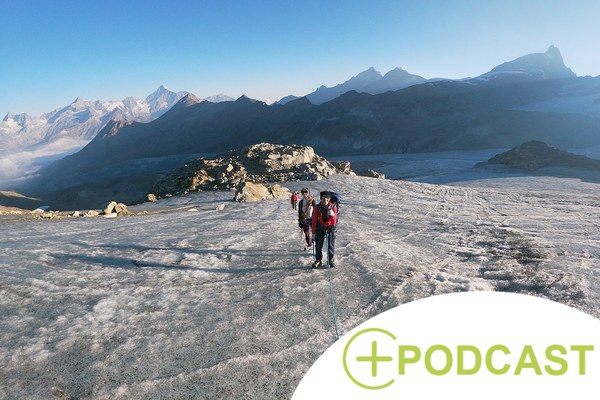
Expedition for future female glacier researchers
Stay overnight on the glacier for over a week, climb peaks, carry out scientific experiments: the “Girls* on Ice” project offers girls an awe-inspiring summer experience.
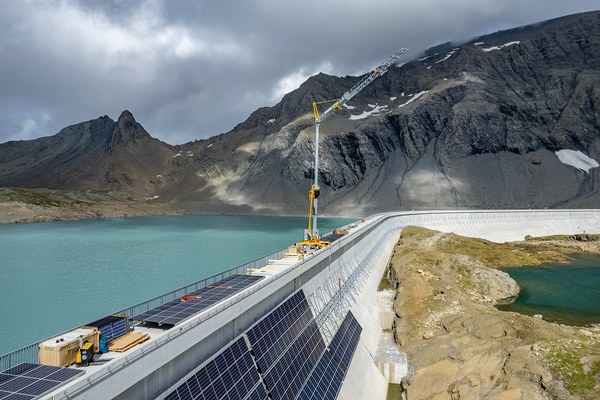
Unsuitable landscapes for energy production
The results of a recent survey from Switzerland are clear: no to energy production in almost unspoilt mountain areas. Intensively used areas around ski resorts or existing power plants would be better suited to the expansion of renewable energy.
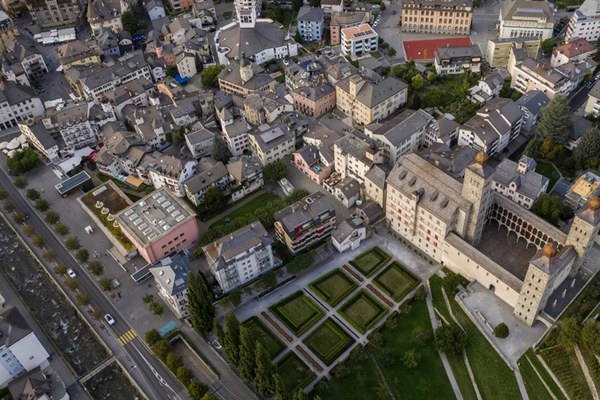
Alpine towns – key to sustainable development
The ninth Report on the State of the Alps, entitled “Alpine Towns”, was presented as part of the Swiss presidency of the Alpine Convention. It sheds light on how the Alpine settlement system hinders – or helps – the sustainable development of the Alps.
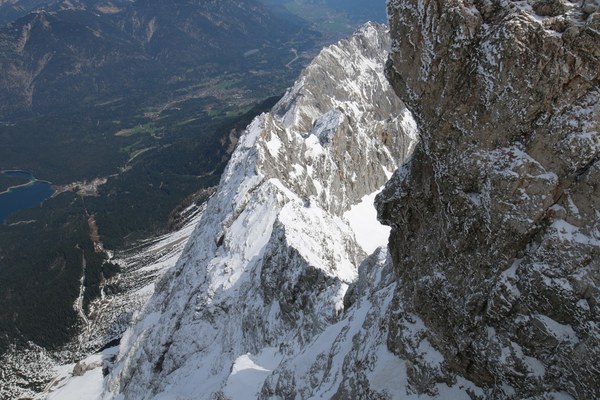
Climate crisis makes mountains crumble
Rockfalls and rockslides are nothing new in the Alps, but dwindling permafrost is making the situation even worse – for mountaineering and for villages.
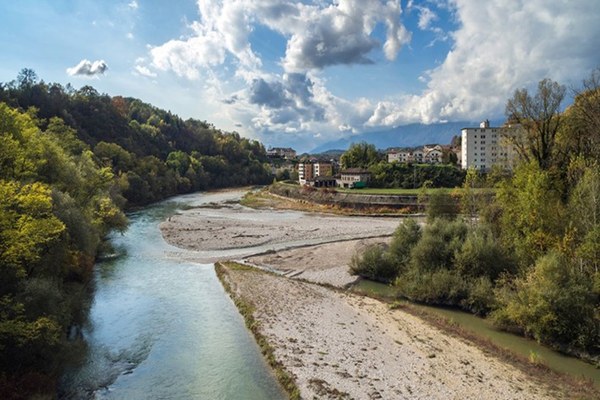
Climate protection: from plan to action
The Alps as a climate-neutral, climate-resistant region by 2050: this is the objective of the newly launched “Climate Action Plan 2.0” of the Alpine Convention. Concrete steps will now follow in such areas as mountain farming, spatial planning and biodiversity.
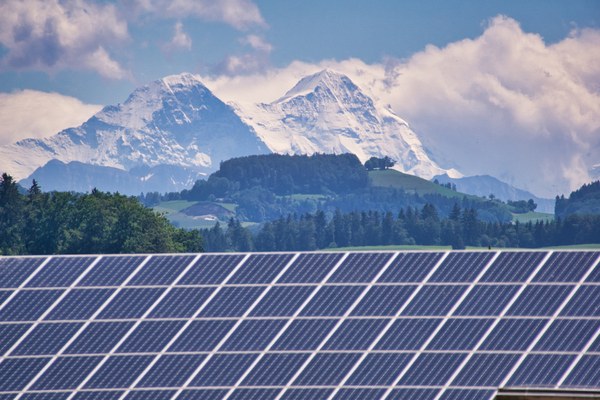
CO2 legislation: more courage needed
While the new CO2 law in Switzerland has for the time being failed, a climate protection alliance is forming in Bavaria; Austria is discussing a climate protection law; and in France the Climate Council is taking courageous decisions.
Turning risks into opportunities
On this October afternoon in the Swiss region of Surselva, the hotel in Vals is a hive of activity as a group of people discuss and gesticulate in German and Romansh. They’re engaged in an exchange of views on the opportunities, risks, and future of the valley in the wake of climate change.
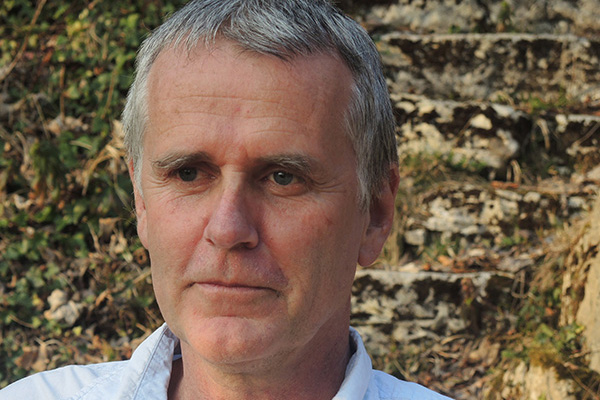
Point of view: Switzerland needs help with its climate policy
Switzerland was formerly a leading light in environmental policy. Today, sadly, it does not even have a plan for implementing the goals of the Paris climate agreement, says Hans Weber, executive director of CIPRA Switzerland.
Young, climate-conscious, and thirsting for action
Young people from five Alpine nations campaigned as part of the My Clime-mate Project to make the Alps a carbon-neutral region. At the end of October they took stock - and forged new plans.
The Alps are renewed in Poschiavo
On what sort of resources are the Alps building their future? Can climate change be an opportunity? What ought to be done to ensure that young people have prospects? The Alpine Week being held in the Swiss valley of Val Poschiavo from 5 to 8 September 2012 aims to discuss just how renewable the Alps actually are.
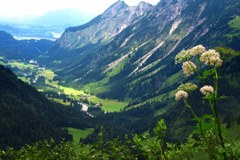
Changing forests
The seminar titled Forestry and Climate Change - Thinking One Step Ahead! looks at the consequences of global warming on the timber industry, forestry and its functions. What sort of strategies are needed to ensure the sustainable development of the forest within the context of regional development?
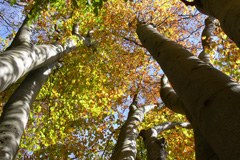
Extremes of climate affect spread of tree species
In a recently published study scientists at the WSL (the Swiss Federal Institute for Forest, Snow and Landscape) working with an international research team demonstrated for the first time that the disappearance of tree species in certain regions is due not just to the higher mean temperature but also to extremes of climate-related events.
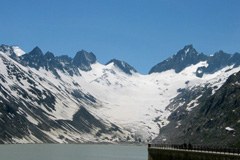
Toxic glacier melts
A new study has confirmed that melting glaciers release chemical substances that have long been banned and are not longer produced by industry. Researchers from Swiss education institutes took frozen sediment core samples from the Oberaar reservoir in the Grimsel area in Switzerland and used the layers to reconstruct the history of the lake back to when it was first established in 1953.
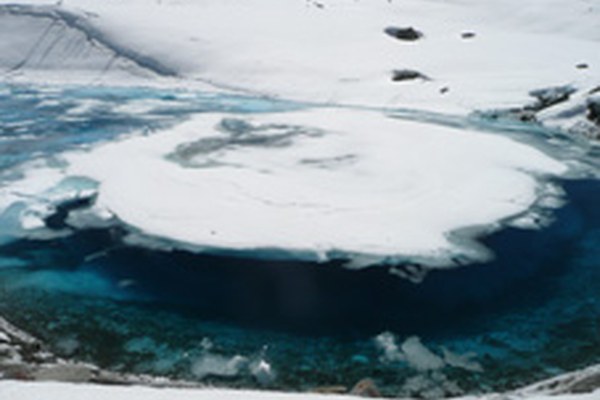
Melting glaciers on your local mountain - what now?
On 24th and 25th September 2009 cc.alps is organising an international conference on the impact of melting glaciers on communities in collaboration with CIPRA Switzerland and the Swiss Foundation for Landscape Preservation in Crans Montana/CH.
"RiskPlan" facilitates risk management
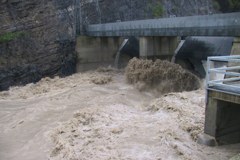
The "RiskPlan" analysis software was developed by the Swiss Federal Office for the Environment (FOEN) and the Swiss Federal Office of Civil Protection (FOCP) and presented as part of the AdaptAlp Project (Adaptation to Climate Change in the Alpine Space).
Is climate change drying up the Alps?
The Alpine range will continue to fulfil its role as central Europe's water tower in the future. But not without restrictions, according to the forecasts of a current study by a group of 20 experts commissioned by the European Environment Agency (EEA).
Rhône Glacier to melt away by 2100
Scientists at the Écoles Polytechniques Fédérales de Lausanne/CH and Zurich/CH have used complex computer simulations to predict that the Rhône Glacier in the Canton of Valais/CH will have disappeared by 2100.
Alpine ski resorts melting away
A quick demise looks to be on the cards for two ski resorts in the Ticino/CH. Indeed the ski station at Abondance/F did not even go into operation this season.
UN Conference on Tourism and Climate Change
A three-day United Nations conference was held in Davos/CH in early October on the subject of tourism and climate change. In a joint statement the participants urged action by the tourism sector to face climate change and reduce emissions.
Tackling climate change with bare facts
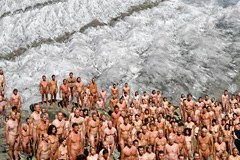
Switzerland's Aletsch Glacier was recently the scene of an unusual protest action. Around 600 people gathered on the Alps's largest glacier to draw attention to the impact of climate change - by stripping off completely. The participants, who had travelled from all over Europe, were positioned on the Glacier in a variety of ways by photographers and five camera crews, and photographed from all sorts of angles.
1.5 tonnes of artificial fertilizer for skiing competitions?
The impact of climate change on skiing areas is the subject of the OECD study published on 13 December 2006. It concludes that if a region's average annual temperature increases by one degree, only around 500 of the 666 skiing areas in the Alps could be assured of snow.
Davos on the road to Kyoto
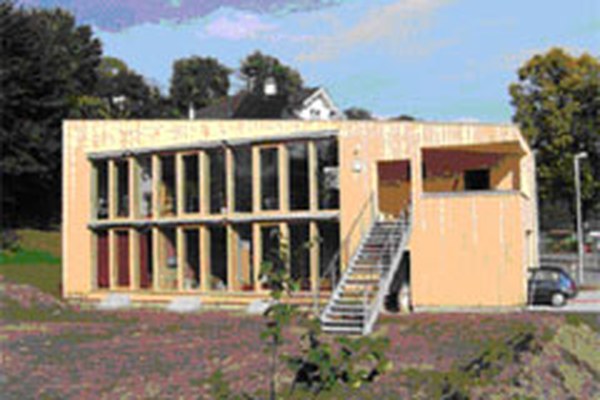
Davos, Switzerland's highest town, is working towards a more climate-friendly local policy.
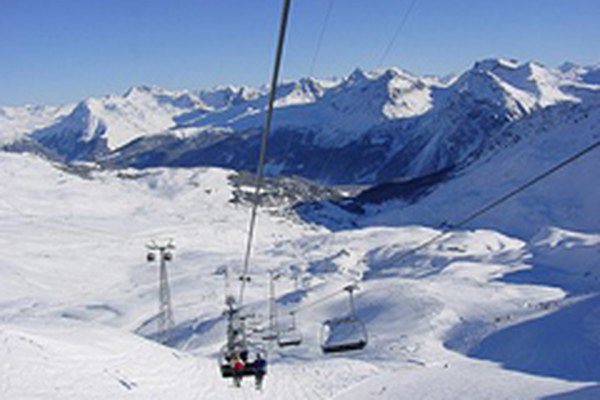
Climate-neutral winter holidays in Arosa
In co-operation with the company ClimatePartner the holiday region of Arosa/CH is the first resort in the Alps to offer climate-neutral winter holidays.