
Articles
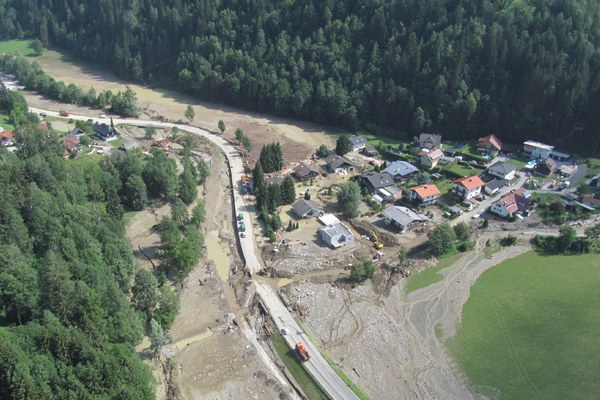
After the flood
What role could biosphere reserves play in dealing with climate risks? This was the subject of an international workshop organised by the MultiBios project in Bad Kleinkirchheim/A at the beginning of April 2024, which included a site visit to the Gegendtal valley that was affected by heavy rainfall and flooding two years ago.
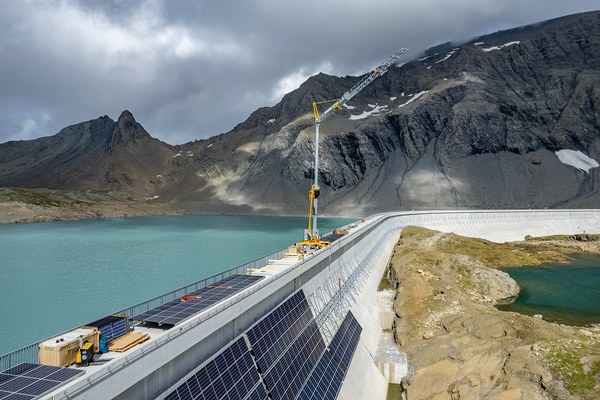
Unsuitable landscapes for energy production
The results of a recent survey from Switzerland are clear: no to energy production in almost unspoilt mountain areas. Intensively used areas around ski resorts or existing power plants would be better suited to the expansion of renewable energy.
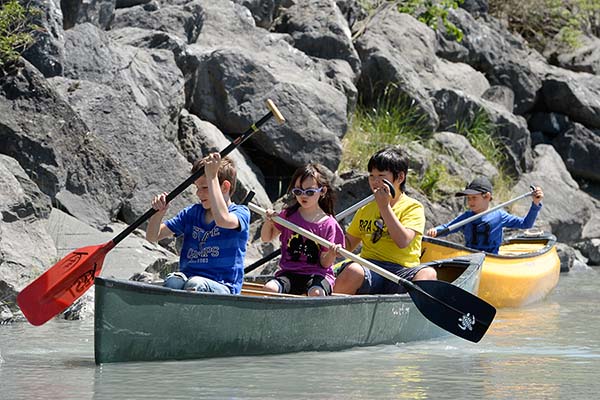
The Alpine Rhine fête
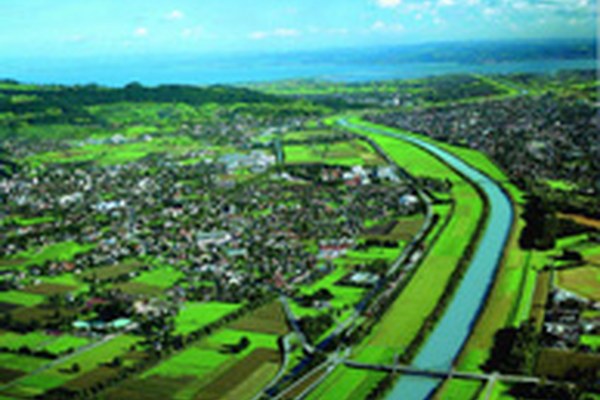
CIPRA Liechtenstein. Taming Europe’s biggest torrent began some two hundred years ago. Today, the Alpine Rhine is a canal, its course lined for the most part by intensively used farmland and residual pockets of wetland forest.
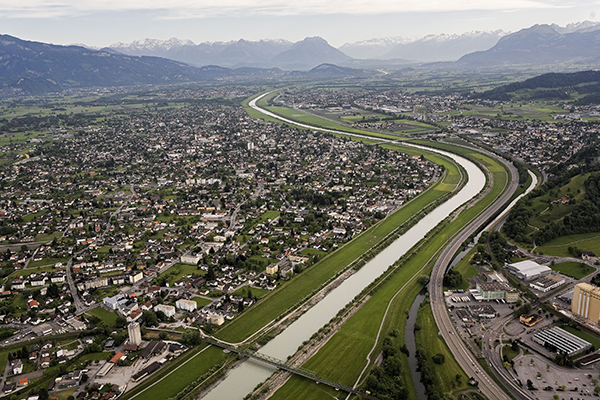
One river, numerous desires: disagreements about the Alpine Rhine
A current bone of contention between different interest groups is the priority to be given to the various uses made of the Alpine Rhine: as a farming area, as a habitat for the little ringed plover and the German tamarisk, or as a drinking water reservoir. SPARE, a new European Union project for the Alpine region, will offer assistance for the holistic management of watercourses.
Salmon coming to the Rhine
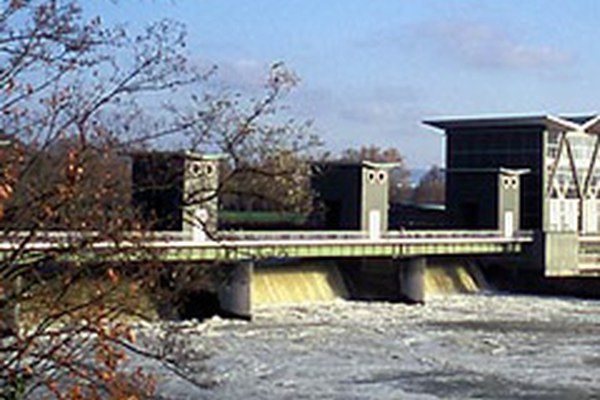
From the Atlantic to the Alps: by 2020 the Rhine will once again be a home to salmon. These migratory fish will then be able to swim unhindered all the way to Basel -short-term by unconventional means where necessary.
Swiss research into sustainable water use
Melting glaciers create new lakes in the Alps. This creates new tourism potential and new risks, such as floods and landslides, for the inhabitants of the valleys. Where and when are such lakes created? Who owns them and who is responsible for them?
Toxic glacier melts
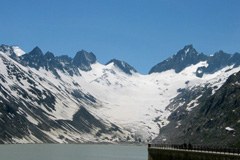
A new study has confirmed that melting glaciers release chemical substances that have long been banned and are not longer produced by industry. Researchers from Swiss education institutes took frozen sediment core samples from the Oberaar reservoir in the Grimsel area in Switzerland and used the layers to reconstruct the history of the lake back to when it was first established in 1953.
Is climate change drying up the Alps?
The Alpine range will continue to fulfil its role as central Europe's water tower in the future. But not without restrictions, according to the forecasts of a current study by a group of 20 experts commissioned by the European Environment Agency (EEA).
Rail tunnel ground water to heat a tropical greenhouse
In the future, the ground water that drains from the Lötschberg Base Tunnel at a temperature of 20°C will be piped into a tropical greenhouse which is to be built at the northern portal in Frutigen/CH to produce fish and tropical fruit, and also to heat the administration building.
Swiss Mountain Award 2008
The Swiss Mountain Award is to be presented this year for the fourth time in a row by the Government Conference of the Mountain Cantons.
Economic and ecological effects of artificial snow
A new study by the Swiss Federal Institute for Forest, Snow and Landscape Research (WSL) highlights the effects of technical snow-making systems on the regional economy, the use of resources and the environment.
Swiss Mountain Water Award 2007
This year again, the Swiss Mountain Water Award initiated by the Government Conference of the Mountain Cantons is to be held for the third year running since 2005, with prize money worth CHF 50,000.
New issue of the Journal of Alpine Research series
The latest issue of the Revue de Géographie Alpine series comprises five specialist articles on a variety of topics. One article examines the causes of flooding and the measures that are necessary to prevent it based on the example of the Isère/F region while another article focuses on sustainable water management in general.
Decrease in water runoff from the Swiss Alps
A new study analyses the impact of a potential climate change on hydrological discharge regimes from the Swiss Alpine region for the period between 2020 and 2050. Eleven catchment areas with different glaciation rates and altitude ranges were examined.
2005 Swiss Mountain Water Award launched
The Governmental Conference of Alpine Cantons (GCAC) has launched the Swiss Mountain Water Award, which is endowed with a total of CHF 50,000. The objective of the competition is to initiate and promote practical water projects capable of making a substantial contribution to increased net output in the mountain areas of Switzerland in commercial, ecological, social and/or institutional terms.
Artificial high water affects ecology of running water
A new WWF study shows that the artificial high-water (surges) and low-water (sinks) caused daily by hydraulic power plants are having disastrous repercussions on the ecosystem of running water.
World Water Day: Calls for waterway conservation and a stop to deregulation
The motto for this year's International Water Day on March 22 was "Water and Natural Catastrophes". A number of organisations seized the day to put forward their demands for better water conservation.

New four-language dictionary on flood protection
The Swiss Federal Office for Water and Geology and the Swiss Federal Chancellery have published a dictionary on flood protection in German, French, Italian and English.
Cross-border co-operation for the alpine Rhine and Rhine
The comprehensive survey into the current situation conducted as part of the "Alpine Rhine Development Concept" is now completed. On July 1 experts presented the results before representatives of local communities, environmentalists, anglers, energy suppliers and other parties with a vested interest. For the first time the groups concerned are able to take part in a planning project within an international framework.