
Search
99 items matching your search terms.
The Alps as Commons
How does ecologically sustainable management in the Alpine region contribute to a better quality of life? Answers and food for thought are provided by the themed booklet SzeneAlpen, published in November 2020.
News
Fit for work
Change to bus, train, bike or e-bike: pilot companies in the Alpenrhein-Bodensee-Hochrhein region are testing healthy ways to work in the three-year Interreg project Amigo.
News
Wanted: pioneering renovations and new buildings
The fifth edition of the international architecture prize, "Constructive Alps", has been launched. Renovations and new buildings that set an example for sustainable construction in the Alps can be submitted until 14 March 2020.
News
AMIGO - Active Commuter Mobility
[Project completed] Reducing cross-border car traffic and focusing more on active mobility: these are the aims of the Interreg project "Amigo".
CIPRA Project
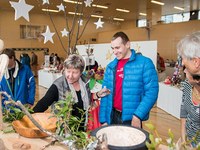
Time and skills as capital
Why you can pay not only with cash but also with talents in Vorarlberg, Austria.
Good practice
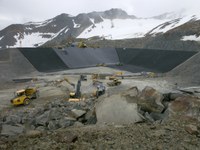
Building – a bottomless pit?
Whether it is a question of major projects or infrastructure developments in protected areas – Alpine countries such as Austria and Switzerland cannot build quickly or easily enough.
News

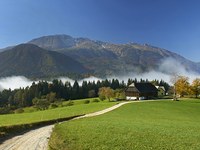
Prospects for young people
Like many other rural areas, the Koroška region of northern Slovenia also has to battle against depopulation. Various measures and ideas now aim to persuade young people to stay.
News
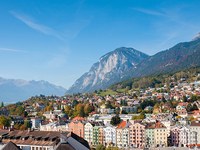
A pioneering region for a carbon-neutral economy and life
The economy of the Alps is to become greener. To make sure it takes on this colour, the comprehensive action programme “Greening the Economy in the Alpine Region” has been launched.
News
Economic activity in mountain areas
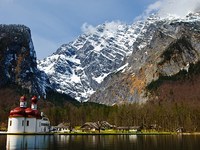
What can – and cannot – mountain areas do? Two new studies from Germany and Switzerland show the opportunities and weaknesses of regional economies and demonstrate that mountain areas can help in determining their own economic future.
News
AlpInnoCT
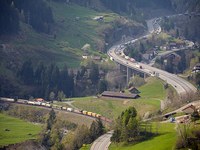
[Project completed] The Alps are a sensitive ecosystem that has to be protected from pollutant emissions and climate change. The alpine road freight transport has enormous ecological and sociocultural effects on the alpine habitat. Most actors such as forwarders, port operators, administrations and consumers, are aware of these negative effects and they are working on their own technical or regulatory solutions. However, a constructive and participatory dialogue between all involved actors, in order to promote sustainable freight transport within the Alps, has not been established so far.
CIPRA Project
Solstice in winter tourism
Tourism has brought wealth to the Alps. In many regions it remains an important source of income, but lack of economic diversification is also a risk. The importance and orientation of tourism differs strongly among Alpine countries, but all of them need new strategies and approaches to cope with shifts in visitor behaviour and climate change. A socio-economic transformation is needed that takes account of tourism’s past, present and future potential.
Position

The Alpine Convention declares itself in favour of the “Green Economy”
How should a sustainable economy in the Alpine region look? The Alpine conference held in Grassau, Germany, in October 2016 adopted a report on this topic: its implementation will show how well-suited it actually is.
News
Young ideas for a green economy
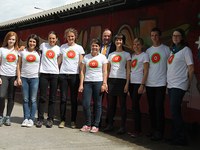
This year’s Youth Parliament of the Alpine Convention, held in the Italian town of Bassano del Grappa, focussed exclusively on the topic of “Green Economy”. The “Youth Alpine Express” also stopped off there.
News
Bus and train: new moves in the Alps-Adriatic region
Public transport between Italy, Austria and Slovenia is moving forward. The consequences remain to be seen.
News
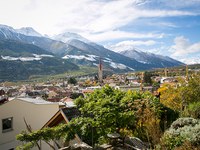
South Tyrol commits itself to the common good
The “economics of the common good” represents a growing trend, including in the Alps. South Tyrol is now putting this into practice.
News
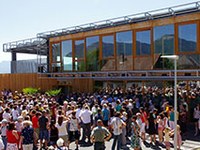
“The Climalp excursion was a breakthrough”
The local authority in Saint-Jean-d’Arvey decided to use local timber to construct an energy-efficient multipurpose building. In an interview with the Mayor Jean-Claude Monin, we learn how the idea was inspired by a CIPRA visit to Vorarlberg.
News
Study suggests roads do not ensure development in the Alps
An investigation conducted throughout the Alps for the first time compares the accessibility of regions with their economic growth. Should a road be just wide enough to allow progress in?
News
Sustainable building in europe’s mountain municipalities
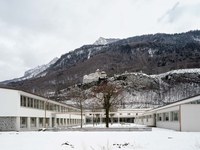
The house of the 21st century is nice and cool in summer, nice and warm in winter, hardly uses energy and – being built of local wood – stimulates the regional economy. The MountEE project explores ways in which municipalities in Europe’s mountain areas can create such a building culture. Seven partners in European mountain areas – among them CIPRA – work together, learn together and jointly improve their strategies and construction methods.
Press/Media release
Olympic Games: no benefit to the national economy
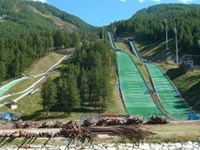
Switzerland is once again discussing its candidacy for the 2022 Winter Olympics. Environmental organisations are warning against the ecological and economic repercussions. Even Marco Blatter, former CEO of Swiss Olympic, has been quoted on Swiss radio, saying that he was glad the 2006 Games were not held in the Valais. He added that in Turin/I the Games had grown out of all proportion. "With all the infrastructure investments Turin cost around CHF 4.5 bn; Vancouver is costing around CHF 6 bn; and Sochi 2014 is officially budgeting for CHF 13 bn," reports Switzerland's SonntagsZeitung.
News
climalp video: living in a plus-energy house
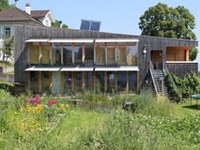
CIPRA's climalp project demonstrates that energy-efficient houses built using regionally sourced timber are highly beneficial when it comes to living comfort, the climate, and the regional economy. A recent video featuring the single-family home of the Götz family built in Switzerland's Rhine valley in 2004 illustrates what sustainable, climate-friendly building can look like in practice.
News
CIPRA Yearly Symposium: marginal creativity...
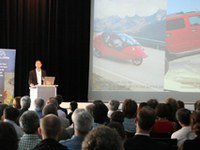
This year's CIPRA Symposium focuses on the socio-economic margins of the Alps. Why "margins"? Because the nearest hospital is a far away and the post office is only open in the morning; because the towns and cities are beckoning, and nature is gaining more and more ground. The prevailing process of urbanisation has little in the way of prospects to offer these mountain regions, whose potential is already low.
News
Successful destinations in alpine tourism
BAK - Basel Economics has been analysing the success and competitiveness of some 100 tourist destinations in the Alpine region on a regular basis since 2005; however the study focuses only on economic aspects and does not take ecological aspects into account.
News
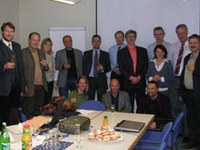
NENA: A new network of innovative enterprises in the Alps
A network of innovative and sustainability-orientated enterprises and umbrella organisations in the Alps was officially established in Zurich in mid-January.
News
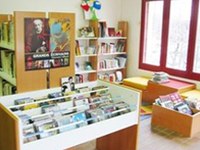
International Workshop: Services for people living in rural mountain areas
The next workshop of the international series "Disseminating knowledge - connecting people" of Future in the Alps is dedicated to the topic of innovation, community use and participation relating to services for people living rural mountain areas.
News
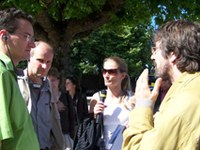
NENA: getting together, exchanging views and setting up an enterprise network
Through its NENA Project, CIPRA International is pursuing the goal of setting up a network of innovative and sustainable enterprises in the Alpine region. To strengthen this Alpine-wide network and plan future action programmes together, a large-scale event is to be held in Bregenz/A from 26 to 28 September.
News
From timber construction to hay wraps - Besides natural resources people's skills and commitment are the Alps' real wealth
Deploring the exodus of the population and the proliferation of tourism, and doing nothing about it, is one approach; the other, far more constructive solution is to show how money can be earned, and secure jobs created, using the resources available locally.
News
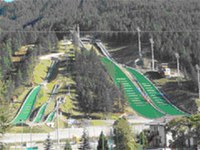
Olympic infrastructures - A bottomless pit?
The infrastructure facilities built for the Olympic Winter Games in Turin in February 2006 have proved an expensive legacy.
News
Brain Drain and Brain Gain in peripheral regions
The focus of the 2003 - 2007 "Brain Drain - Brain Gain" Project is the development, introduction and evaluation of action plans that reduce the migration of skilled labour from peripheral regions and instead favour migration into these areas.
News
Piedmont mountain population demands its rights
In Turin/I on 22 February representatives of civilian society from the mountain regions of the Piedmont presented their signed Piemonte Alpine Treaty. The document is the result of intensive debate and discussions, and denounces the political, economic and cultural discrimination of the Piedmont mountain regions compared with the power centres in the pre-Alps and cities.