Going underground? One tunnel breakthrough, numerous question marks
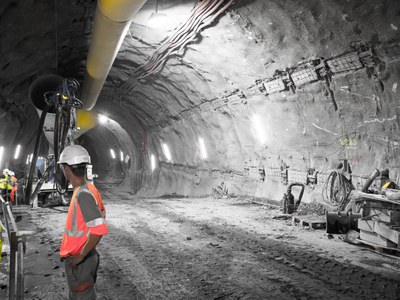
On 18 September 2025, politicians from Austria and Italy celebrated the breakthrough of the Brenner Base Tunnel between Austria and Italy. They dream of “smooth traffic” through and over the Alps – but many questions remain unanswered.

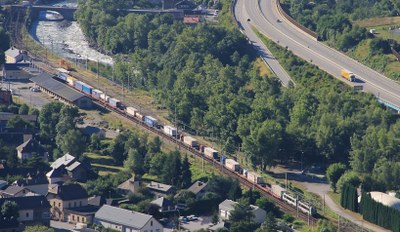
The Austrian Chancellor described the breakthrough at the Brenner Base Tunnel between Italy and Austria as a “historic moment” – from the 2030s onwards, freight traffic will travel underground on rails instead of by road over the Brenner Pass. This would mean less noise and exhaust fumes along the Brenner axis. But many questions remain unanswered: When will the shift to rail actually happen? What will be the outcome of Italy’s lawsuit against Austria before the European Court of Justice (ECJ)? Why are politicians talking about “free-flowing traffic”?
According to experts, a lack of access routes and delayed accompanying measures mean it could take decades before the majority of goods are transported through the tunnel. Italy’s transport minister sees the night-time ban on lorries on the Austrian Brenner motorway as a restriction on the free movement of goods and has therefore taken Austria to the ECJ. There was no sign of this at the celebrations to mark the breakthrough, however. South Tyrol’s governor spoke of two goals for the Brenner Base Tunnel: a better situation for residents and the environment on the one hand, and smooth traffic flow on the other. Elisabeth Ladinser, president of CIPRA South Tyrol, counters: “If the tunnel is to be of any benefit, goods must be directed onto the railways, which must become cheaper than road transport. The Brenner road route is still too inexpensive. Smooth traffic flow and supposed safety must not be used as arguments for ever-increasing road capacity. Only less traffic will be more environmentally friendly and safer for people!”
As a counterpoint to the Brenner breakthrough, Uwe Roth, President of CIPRA International, on 20th September visited the car-free cycling day on South Tyrol’s Mendel Pass. With over 3,700 participants, the event showed what matters when it comes to mobility and transport in the Alpine region: the needs of people and nature. Roth also sees the Cycling Day as a signal to politicians: “Not only in South Tyrol, but throughout the Alpine arc, we are calling on politicians to take measures that will enable mobility behaviour that is compatible with people and nature. This also applies to the passes, not just below them.”
Sources and further information:
https://orf.at/stories/3405863/ (de), www.bundeskanzleramt.gv.at/bundeskanzleramt/nachrichten-der-bundesregierung/2025/09/neuer-weg-durch-die-alpen-beginn-eines-neuen-kapitels.html (de), www.umwelt.bz.it/medien/presse/autofreier-mendelradtag-ein-neuer-rekord-1067/ (de, it)
Further information
Position: Transport and mobility in the Alps