Alpine water: who gets the last drop?
Climate change, increasing soil sealing and pollution are all threats to water in the Alps. At the second Liechtenstein FutureForum Alps in Schaan, held at the end of June 2025, around 160 participants from various Alpine countries discussed the future of the water supply.

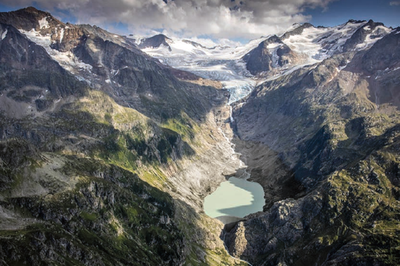
The Alpine region is regarded as the water tower of Europe. Its overuse through tourism and hydropower, as well as pollution from microplastics, fertilisers and pesticides, are however on the rise. Climate change is also altering the water cycle, with rising temperatures, heat waves and highly variable precipitation. Under the title “H2O: precious, powerful, scarce”, the second Liechtenstein Future Forum Alps, held on 27 and 28 June, addressed the question of how water supplies can be secured for people and nature in the future.
Around 160 experts, students, schoolchildren and interested parties from the Alps discussed these matters and networked at the conference organised by CIPRA International in Schaan/LI. In her opening speech, Sabine Monauni, Liechtenstein’s Deputy Prime Minister and Minister of the Environment, emphasised: “It is in our own best interests and it is our shared responsibility to actively shape the sustainable use of our water resources.”
“The water cycle is a global common good.”
In his presentation, hydrologist Johannes Cullmann, Sustainability Coordinator at the United Nations University in Dresden, called for a new way of thinking: “The water cycle is a global common good that requires understanding and cooperation across all our river basins.” Climate change is exacerbating the already difficult water situation. According to Cullmann, an expert on water issues, the circular economy and water reuse can counteract this.
In her presentation, freshwater ecologist Monica Tolotti made the following call: “For sustainable water management, we need to improve the multiple uses of water, reduce waste and resolve increasing conflicts of interest.”. A scientist working at the Fondazione Edmund Mach in Trentino/I, she highlighted – among other things – the consequences of glacier and permafrost melt in the Alps: in some regions, trace elements are accumulating, including harmful heavy metals. In addition, the capacity of watercourses to dilute pollutants is decreasing.
The conflict between water use and protection
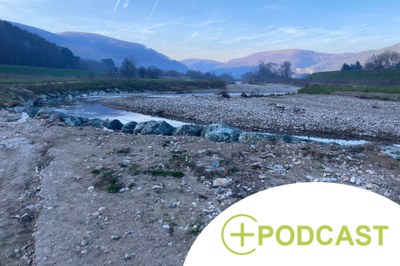
How can rivers be restored to their natural state? What is the water footprint of ski tourism? How do extreme weather events influence agriculture and urban planning? Participants discussed possible solutions in various in-depth sessions. An excursion to the Rhine illustrated the diverse demands placed on the river – from habitat to flood protection.
The second day of the conference opened the topic to the general public, with walks to streams and urban development sites in Schaan, an excursion into the mountains, an information session on drinking water and a reading for children. Emanuel Schädler, Minister of Society and Justice in Liechtenstein, emphasised that water is heavily polluted in many places around the world. This makes it all the more important to treat water as a precious resource with humility and responsibility – for the benefit of future generations.
The results of the conference are available online at www.zukunftsforumalpen.li
The Liechtenstein Future Forum Alps is sponsored by the Government of the Principality of Liechtenstein, organised by CIPRA International and financially supported by the municipality of Schaan.
Further information
Climate risks: better to prepare than to wait