Alpine Politics

For more than 70 years, CIPRA has been working to promote sustainable policies for the Alps, looking ahead, putting tomorrow’s challenges on the political agenda and taking policymakers to task.

For a good life in the Alps, it is important to guarantee a balance between economic interests and the needs of the local populations and nature. CIPRA helps to bridge this gap on the political stage. The protocols of the Alpine Convention offer guidance. In combination with other tools, they empower the political actors to adopt appropriate measures.

The tools of Alpine policy

  • The Alpine Convention is an international treaty involving the countries of the Alps and the European Union. As co-initiator, CIPRA helped to create a fundamental requirement: an international political body for sustainable development and protection for the Alps. CIPRA contributes expertise in the Compliance Committee and the working groups.
  • As a mountain chain at the heart of Europe, the Alps are strongly impacted by the policies of the EU. The EU strategy for the Alpine Region (EUSALP) is being established to strengthen future cooperation between the Alps and the surrounding regions and cities. CIPRA and its partners are calling for civil society to be involved in this process.
  • In its core activities and beyond, CIPRA is working in national and transnational political bodies for a good life in the Alps.

CIPRA’s vision

  • A strong civil society
    Cities, municipalities, regions and countries of the Alps communicate their experiences and learn from one another. They involve the people in the planning processes and take account of the ideas and visions of young people. They set the framework conditions needed for all three pillars of sustainability – economy, nature and society – to be strengthened in equal measure.
  • A vibrant Alpine Convention
    The Alpine Convention provides a framework for these endeavours. It is an active clearing house. Keen use is made of its various platforms and working groups, while the Compliance Committee provides effective monitoring of observance of its provisions.
  • A responsible response
    The 14 million residents of the Alps can count on the solidarity of the 56 million people living in the surrounding regions – and vice-versa. All these people are aware of the special value of the Alps as a living space for human beings and the flora and fauna.

Alpine Convention

For more than 60 years, CIPRA has been working to promote sustainable policies for the Alps, looking ahead, putting tomorrow’s challenges on the political agenda and taking policymakers to task. More

Macroregional Strategy

The EU strategy for the Alpine Region (EUSALP) is to strengthen future cooperation between the Alps and the surrounding cities and regions. CIPRA and its partners are calling for civil society to be involved in the process. More

Sustainable development goals
In its Agenda 2030, the United Nations has formulated a total of 17 goals for sustainable development. What do they mean for the Alps? More

CIPRA's Positions

CIPRA regards it as one of its core tasks to comment on current topics and developments. Its broad support as an umbrella organisation with more than 100 member associations in the Alpine region justifies it. Please check the other language versions for more position papers!

Declaration on protected areas in European mountain regions, Chambéry 2002
The Declaration on Protected Areas in European Mountain Regions emphasises the significance of biological and geological resources and water reserves in mountain regions. It stresses the necessity of targeted development and conservation measures as well as regional co-operation. Protected areas can serve as an experimental field for the development of conservation measures. Concrete steps proposed for the period 2003-2005 include the creation, in each European massif, of a mountain co-operation committee with representatives of governmental and non-governmental organisations. One of the tasks of the committees is to help disseminate information about models and methods to implement nature conservation and to transfer knowledge from research to improve the management of protected areas and sustainable development. Other important factors include encouraging partnerships, networks and joint projects as well as developing strategies for the active participation of populations.
Friends-of-Nature Wildhaus Declaration: tourism and sustainability in the 21st century
Tourism needs an intact natural environment, a vibrant cultural life, and a fair partnership between visitors and visited. As an economic sector, tourism is directly dependent on sustainability. The Declaration calls upon the tourism industry, the tourism regions, governments and individual tourists to curb the consumption of natural resources and reduce the burden of traffic caused by tourism traffic. It also calls on tourism to contribute towards eliminating poverty and to implement a sustainable destination and transport policy for the environment.
Berchtesgaden Declaration on regional co-operation in mountain regions 2002
At the end of June 2002 a conference on international co-operation between the mountain regions of the world was held in Berchtesgaden. The participants at the conference presented ten fundamental principles for regional co-operation. The principles underscore the key responsibility of governments and the need for regional co-operation to ensure the sustainable and proper management of mountain regions. Equal rights, decentralisation and the involvement of resident populations are essential in achieving sustainable development. Measures aimed at establishing cross-border partnerships and networks for the exchange of experience and the dissemination of knowledge are of crucial importance in bringing regional co-operation to life. The Declaration is aimed at governments, the international community, the private sector and NGOs.

News on Alpine politics

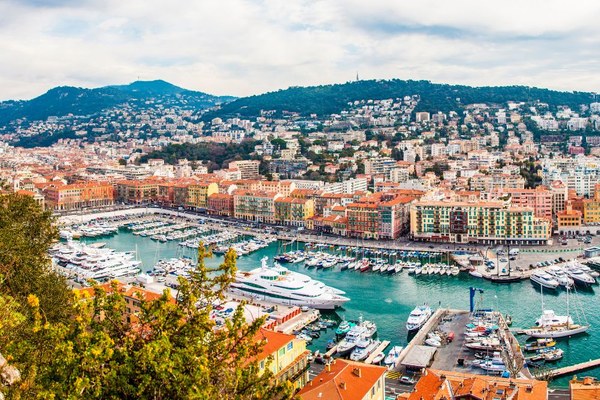
2030 Winter Olympics in Nice
Switzerland’s idea of decentralised, sustainable games has been rejected by the IOC. Instead, the French Mediterranean city of Nice is very likely to be awarded the contract.
Controversial railway tunnel between Turin and Lyon
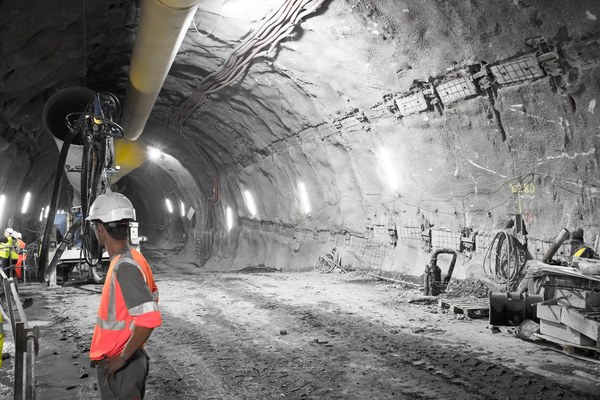
In mid-June 2023, hundreds of people gathered in the French border town of Saint-Jean-de-Maurienne to protest against the construction of a high-speed rail tunnel between Lyon and Turin. In a public statement, CIPRA France and Mountain Wilderness also criticised the project.
Point of view: Avoiding transport collapse together
As regards the growing volume of individual and transit traffic, it can be stated that neither regional nor national perspectives will lead to solutions. We have to find them together, because the Alps lie in the midst of Europe. This geographical truism is central to an understanding of transport policy problems in the Alps so as to avoid transport collapse, says Kaspar Schuler, Executive Director of CIPRA International.
Lawsuits and laws for climate protection
Climate protection laws define clear climate targets, but for many the measures set out are insufficient. Climate lawsuits are increasing political pressure in the Alpine countries.

Point of Views of CIPRA

Point of view: Winter Games need to face reality
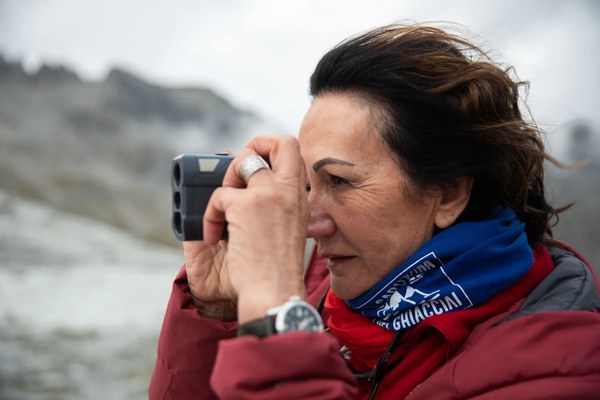
Major events promise modernity, revitalisation and global visibility. In the Alps, however, these promises are now being made in territories marked by the climate crisis, depopulation and, at the same time, growing tourist pressure. Looking closely at Milan-Cortina 2026, what emerges is not only a celebration of sport, but one of the largest public and infrastructure investment programmes ever concentrated in the Alpine area – with effects that are set to continue well beyond the time of the competitions, says Vanda Bonardo, president of CIPRA Italy.
Point of view: Every drop counts
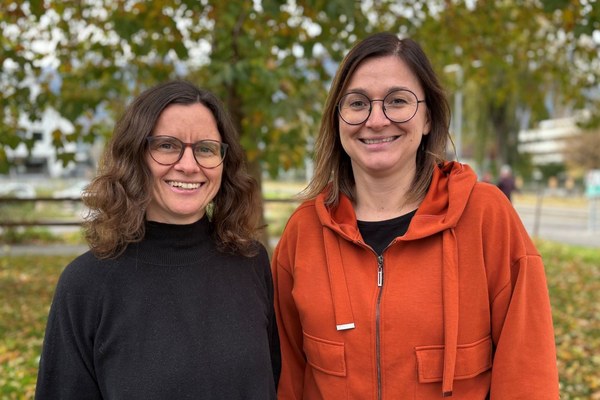
Discussing, eating and laughing together, forging ideas, identifying problems, discovering projects and meeting inspiring people: commitment is contagious, according to Anna Mehrmann and Maya Mathias from CIPRA International, who organised the second Liechtenstein Future Forum Alps on the topic of water in 2025.
Point of view: Climate protection requires clear legislation!
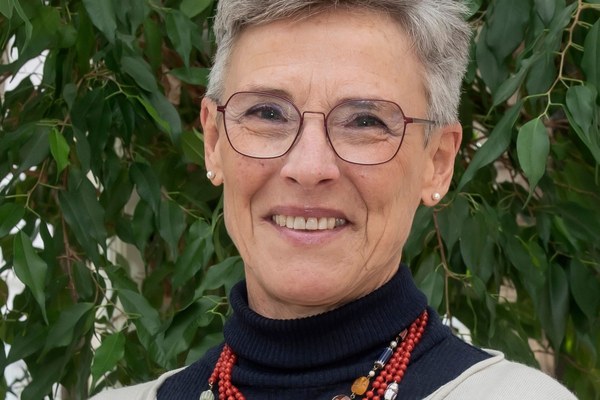
Glacier melt, disappearing permafrost, more frequent rockfalls and mudslides: temperatures in the Alpine region are rising faster than the global average – with dramatic consequences for nature and people. That is why decisive climate protection laws are now needed at regional and national level, demands Elisabeth Ladinser, chair of the South Tyrolean Umbrella Organisation for Nature and Environmental Protection and president of CIPRA South Tyrol.
Point of view: Holidays have a lasting impact
Holidays mean time out, a change of scenery, relaxation. But where and how we spend our holidays doesn’t just affect us; it also has an impact on other people, regions, the climate and nature. Magdalena Holzer, project manager at CIPRA International, is convinced that travelling is a decision that brings with it with great responsibility.
Point of view: Let’s plan the energy transition and restoration together!
Alpine spatial planning can help to resolve the contradictions between restoration and the expansion of renewable energy. This requires joint efforts involving the interests of the population and environmental organisations, says Paul Kuncio, Executive Director of CIPRA Austria.
Point of view: Let’s prioritise youth over tourism
We want young people to stay on the land, but the demands of tourism, high property prices and the landscape as an object of speculation make this difficult. We talk about the fight against the climate and biodiversity crisis, all while shopping centres and business parks are being built in the countryside. Environmental protection and solutions to the housing crisis should be prioritised, as this would also be in the interests of young people, says Dijana Čataković from CIPRA Slovenia. She asks: Who else will be able to live in the Alps and afford to live there?