
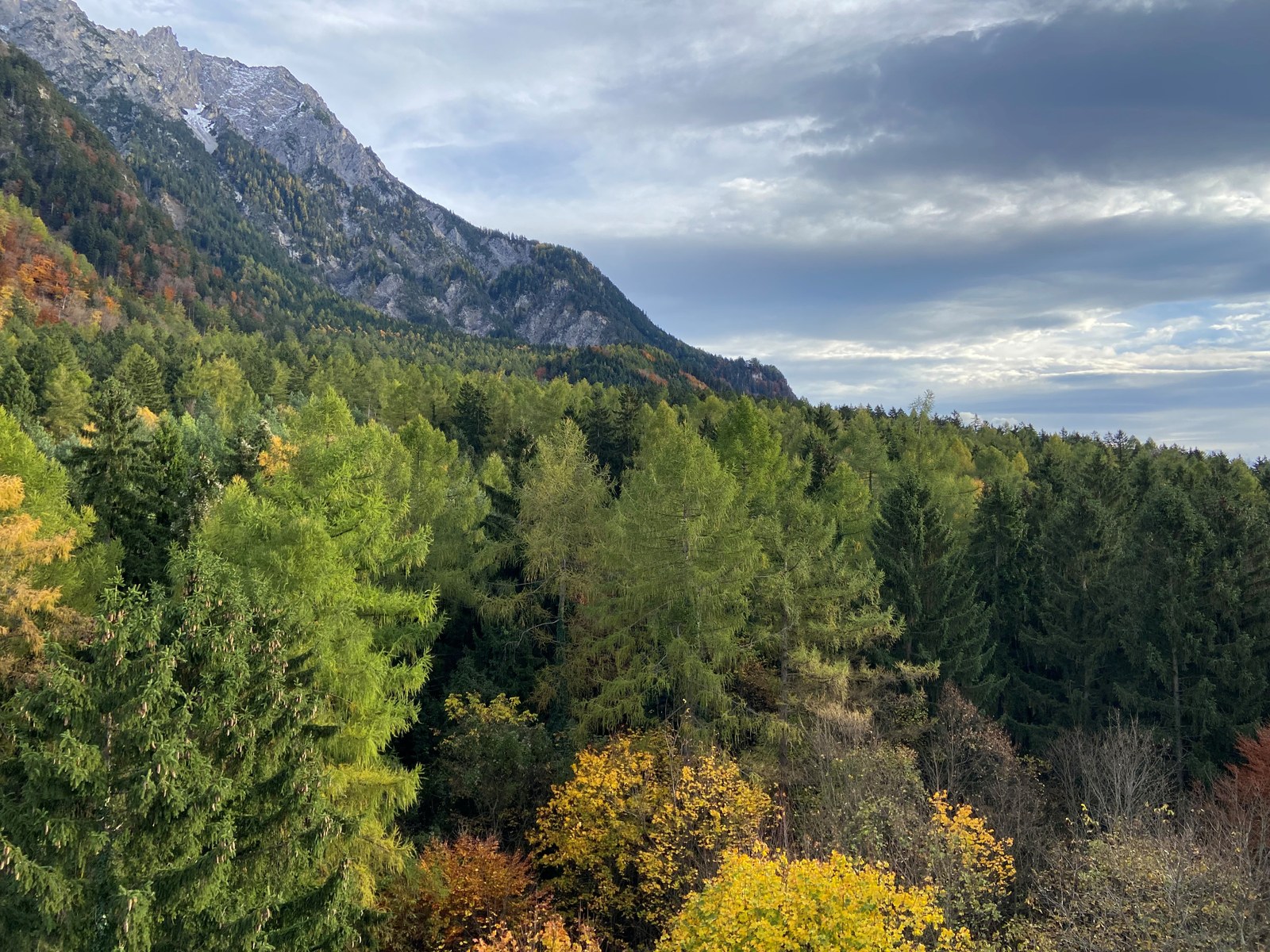
Act now to protect forests: sign the #HandsOffNature petition!
More than 40 percent of the Alpine region is covered by forests. They are not only a defining feature of the landscape, but also a cornerstone of Alpine livelihood, providing building materials, supporting biodiversity, and delivering essential ecosystem services.

Who is CIPRA?
Find out more!
More articles
Renewed website Ecological Networks in the European Alps
The Ecological Continuum Initiative has launched its renewed webpage. Apart from the new appealing graphic design the website is also richer in information in German, French, Italian and Slovenian language such as publications, links, events and news. Therefore the website is more attractive for a wide public.
"The Wall": Less barriers, more life!
Stop - no way through! On 20th of October 2010 a giant wall blocked the way of pedestrians in Zurich/CH, Vienna/A, Munich/D, Ljubljana/SI, Milan/I and Lyon/F. For animals, it's the same every day: streets and settlements increasingly fragment their migration routes.
Sergio Savoia | WWF European Alpine Programme | Bellinzona, CH
Dear colleagues and friends of the Ecological Continuum Initiative,
The international year of biodiversity is coming to an end. 2010 represented a unique opportunity to highlight the importance of biodiversity conservation. The topic had a large echo in the media, thanks to numerous events, new publications, TV reports etc. The year was also fruitful for ecological connectivity - a not so simple topic that received unprecedented media attention. In 2010 the Ecological Continuum Initiative's main focus was on communication. Many articles were published in specialized media. However our main achievement was "The Wall" event. Its aim was to bring home our message on the need for ecological connectivity, carrying it across the whole Alpine space, across administrative, language and cultural boundaries. We succeeded. Pedestrians in six Alpine cities were confronted with a big barrier blocking their paths: an obstacle much like those encountered by animals and plants every day. The public had therefore a chance to experience first hand the problem of habitat fragmentation. The event attracted the attention of local and national media in the Alpine countries. Thanks to "The Wall" the topic of ecological connectivity has reached many more people than is normally the case for such "technical" subjects. It is an important achievement in which we intend to build further awareness-raising initiatives.
alpMedia | Schaan, LI
A media house for the Alps
The Alps are to have their own multilingual media platform. This ambitious idea was launched by the Rhaeto-Romanic department of Switzerland's public radio broadcaster. Las-Alps-Infoteca is to become "a competence centre for media in the Alps, providing news and information from the Alps and about the Alps".
Projects
CIPRA International
Living Labs
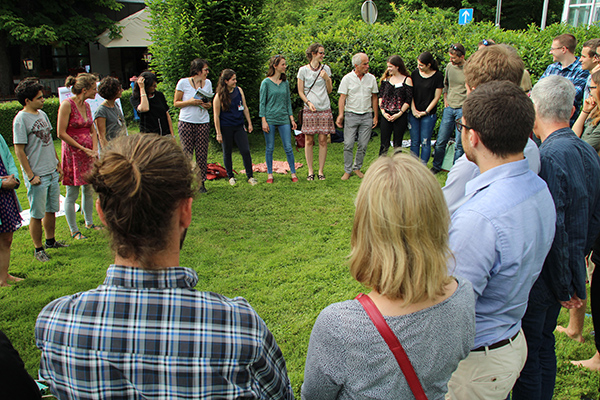
[Project completed] The project “Living Labs” brought together people of different ages from different Alpine countries to work together on process and know-how on selected topics. The project approach was participative and based on the principles of co-creation between young talents aged 18-30 years, environmental NGOs, civil society and politicians. The participants of this intergenerational project are committed to the sustainable development of the Alps at local, national and international level. For a desirable future it is important to set the right course today and to talk about how existing natural resources can be used sustainably.
CIPRA International | CIPRA Deutschland | CIPRA France | CIPRA Italia | CIPRA Slovenija
Sustainable Alpine Tourism
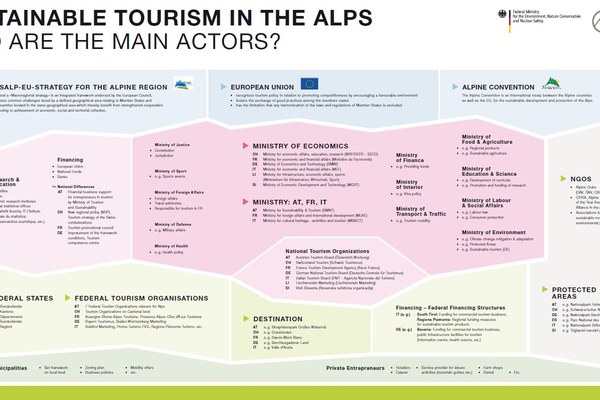
[Project completed] Sustainable tourism in the Alps is the only long-term alternative to conventional mass tourism in order to safeguard the habitat for nature and people. So far, however, there is a lack of jointly defined framework conditions on anational or alpine level for planning, promoting and implementing sustainable tourism.
CIPRA International
Cross-border mobility
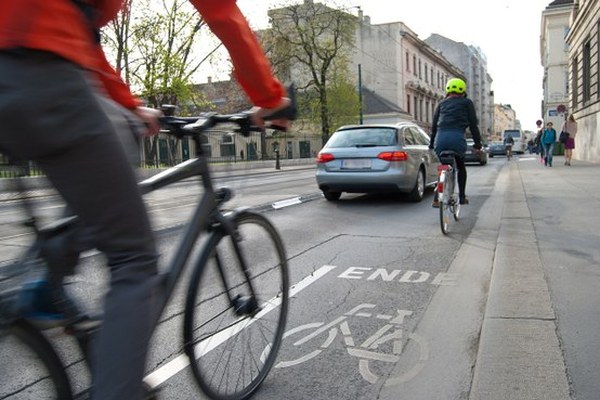
[Project completed] Tens of thousands of commuters move across national borders every day in the Alpine region. Existing traffic routes, however, were mostly built with a purely national perspective and are not geared to cross-border commuter flows. The result is overloaded roads, noise and pollution for local residents.