
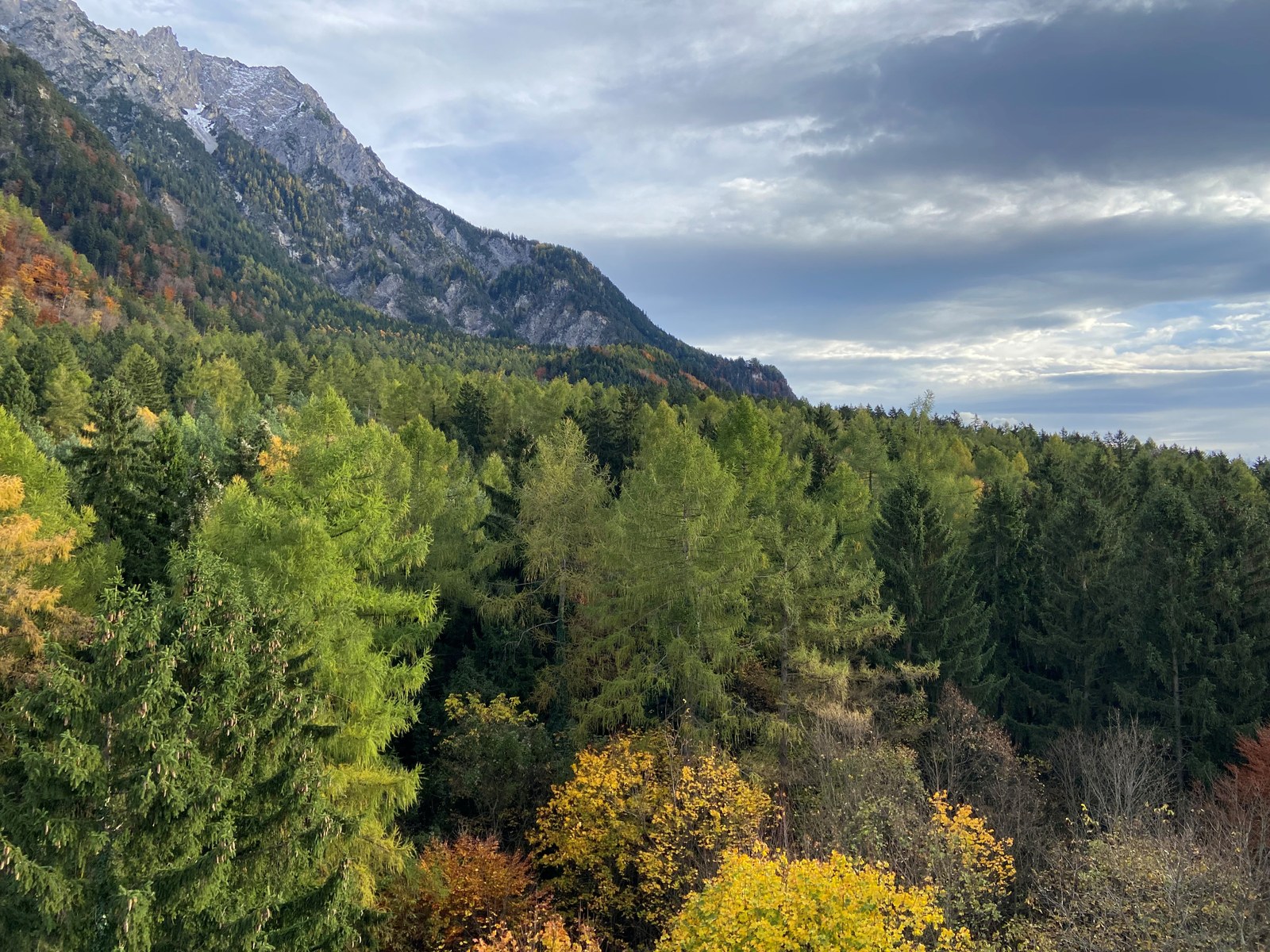
Act now to protect forests: sign the #HandsOffNature petition!
More than 40 percent of the Alpine region is covered by forests. They are not only a defining feature of the landscape, but also a cornerstone of Alpine livelihood, providing building materials, supporting biodiversity, and delivering essential ecosystem services.

Who is CIPRA?
Find out more!
More articles

Michael Gams, CIPRA International
Innovations and aberrations
Helicopter flights and Australian white wine on the one hand, an eco-museum and recycled smartphones on the other: positive and negative awards from environmental organisations point the way to a more sustainable future.
Veronika Hribernik, CIPRA International
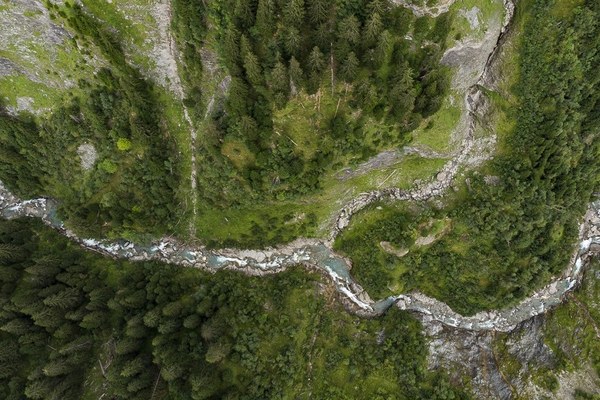
How much hydropower is ecologically sustainable ?
Renovate power plants instead of building new ones, preserve the last freshwater pearls, coordinate use and protection across countries: CIPRA has published a position paper with detailed technical demands on the use of hydropower in the Alps.
Michael Gams, CIPRA International
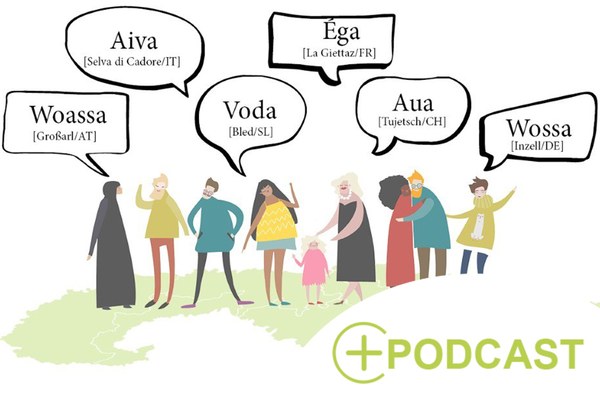
Do you speak Alps?
A different dialect in every community: the linguistic diversity of the Alps is fascinating and constantly changing, which also makes it interesting for linguists. Using modern methods such as crowdsourcing, a research project is collecting dialect words across the Alps for a digital, living lexicon.
Kaspar Schuler, CIPRA International
Point of view: Water will not tolerate resistance
Extreme weather conditions are also increasingly affecting the Alps. The climate crisis is driving this development. Can more and more dams, barriers or power stations solve the problem and at the same time satisfy the growing hunger for energy? We must work with the power of water rather than against it, says Kaspar Schuler, CIPRA’s Executive Director and co-author of CIPRA’s new position paper on hydropower.
Events
|
Youth Parliament to the Alpine Convention: Climate Resilient Development | ||
|
The Better-Cities Event | Ljubljana | |
|
Local Peaks, Global Learning | online | |
|
Transhumance as Intangible Cultural Heritage of Humanity: A Way Forward? | MUCEM, Marseille/France | |
|
Growing alternative crops for new market opportunities in a changing climate | Vienna/Austria |
Projects

CIPRA International Lab
PlurAlps
[Project completed] The Alpine area is experiencing the combined challenges of an ageing population and new migration models. At the same time, opportunities for social innovation and development arise from increasing cultural diversity and pluralism. Mountainous and peripheral Alpine municipalities and regions are specifically concerned and need technical support and new approaches to develop a welcoming culture, which should be credibly embraced and implemented by municipalities, SMEs and civil society.
CIPRA International
BeeAware!
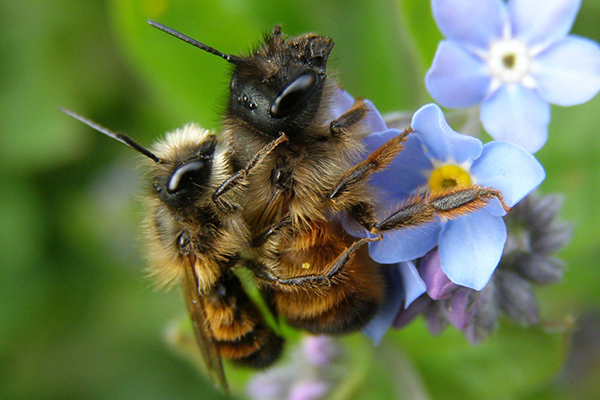
[Project completed] The aim of the project BeeAware! is to inspire communities in the Alps for bee protection and thus to improve the livelihoods of honey and wild bees. Bees are depending on an intact biodiversity. The different bee species need different plants, nesting and drinking places in order to survive. Integral bee protection therefore means securing, improving and enlarging the habitat of these important pollinators.
CIPRA International
GaYA
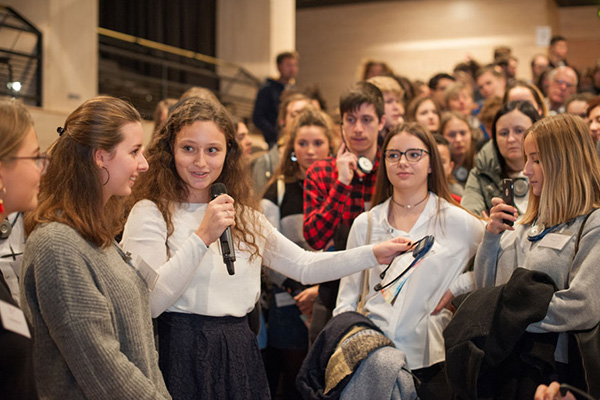
[Project completed] Governance and youth in the Alps - Young people tend to leave the Alpine space because they lack personal and professional fulfilment. Furthermore a majority of decision-makers remain unaware of the benefits a young active population brings to society.