
Articles
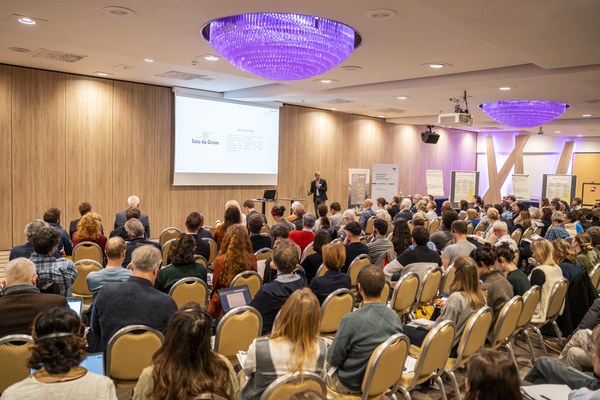
Dialogue on Alpine Spatial Planning: Proceedings of the CIPRA Annual Conference 2025
How can Alpine Spatial Planning mitigate conflicts between the energy transition and nature restoration? This question was addressed at the CIPRA Annual Conference 2025 in Salzburg, which brought together more than 160 participants. The proceedings show key insights and recommended actions – not in a concluding way, but as part of an ongoing learning process and as an impulse for further debates. They underline the shared understanding that the energy transition in the Alpine region must be approached and implemented in a cross-sectoral, interdisciplinary, and transboundary manner.
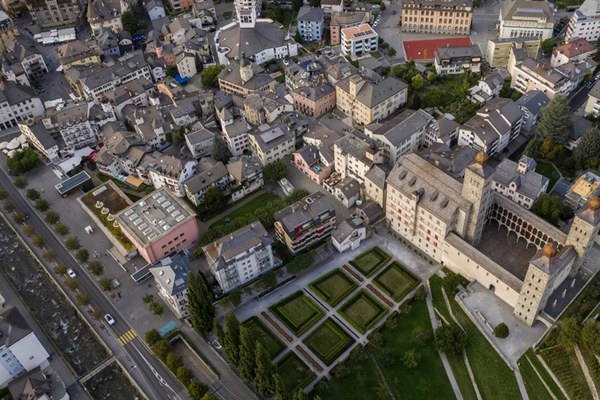
Alpine towns – key to sustainable development
The ninth Report on the State of the Alps, entitled “Alpine Towns”, was presented as part of the Swiss presidency of the Alpine Convention. It sheds light on how the Alpine settlement system hinders – or helps – the sustainable development of the Alps.

Point of view: Let’s create an “Alpine Plan” for all Alpine regions!
The Bavarian Alpine Plan celebrates its 50th anniversary in 2022. Alpine spatial planning has proven here that it is predestined to find solutions to the pressing issues of the day. Similar planning instruments are lacking in many Alpine regions, although we need them more urgently than ever, claim Paul Kuncio, Executive Director of CIPRA Austria, and Uwe Roth, Executive Director of CIPRA Germany.
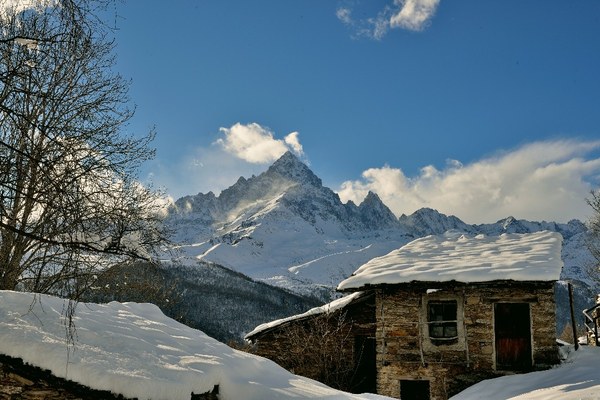
Abandoned and uncultivated
Remote mountain villages in Piedmont/I have been struggling with heavy emigration for years. The region is now supporting people moving back to the mountains. A study from Austria shows how endangered Alpine agriculture actually is.
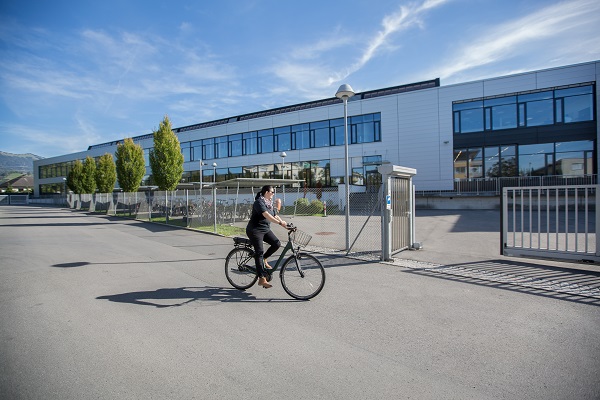
Fit for work
Change to bus, train, bike or e-bike: pilot companies in the Alpenrhein-Bodensee-Hochrhein region are testing healthy ways to work in the three-year Interreg project Amigo.
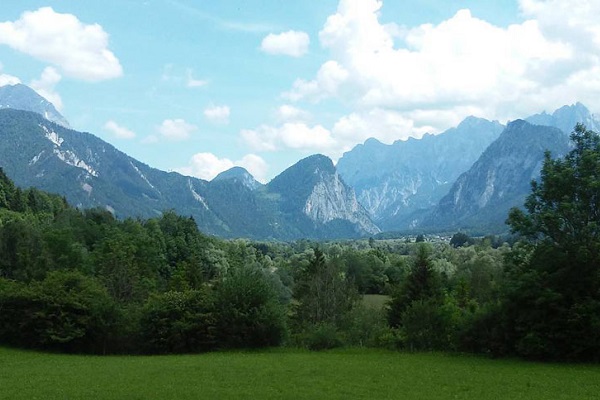
How diversity is lost
Intensive agriculture and climate change: a recent study from Austria shows how much influence both have on the loss of biodiversity in Alpine regions.
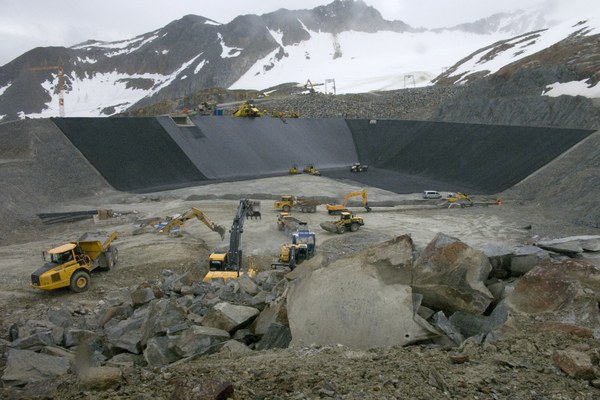
Building – a bottomless pit?
Whether it is a question of major projects or infrastructure developments in protected areas – Alpine countries such as Austria and Switzerland cannot build quickly or easily enough.
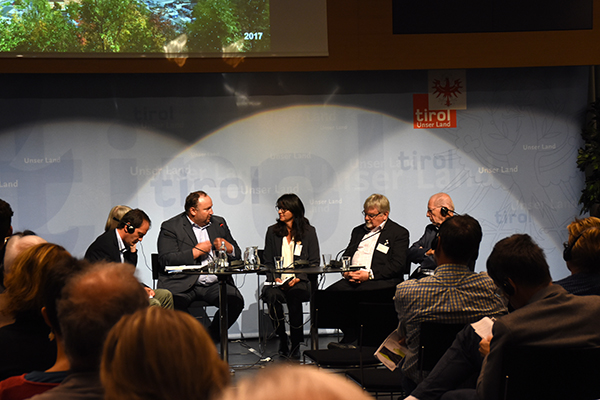
Society’s demands mark the landscape
Conflicting needs and exaggerated expectations collide when it comes to spatial planning. Its role needs to be rethought, with a move away from overall planning and a shift towards guidance and awareness-raising. This was the tenor of the CIPRA Annual Conference held on 29 and 30 September 2017 in Innsbruck, Austria.
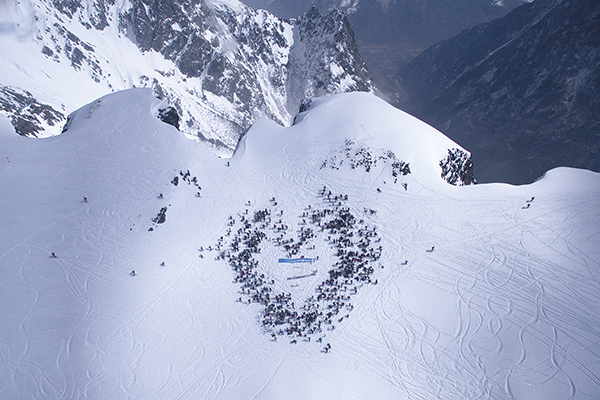
Better protection for natural spaces
Resistance is growing across the Alps against construction activities in pristine or largely unspoilt areas. CIPRA is making an appeal for integrative spatial planning to the Alpine states meeting this week in Murnau, Germany.
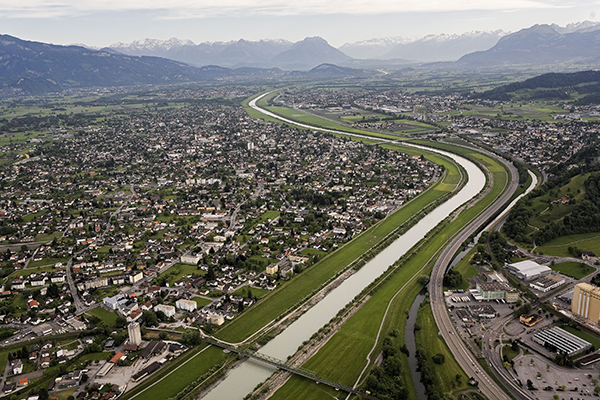
One river, numerous desires: disagreements about the Alpine Rhine
A current bone of contention between different interest groups is the priority to be given to the various uses made of the Alpine Rhine: as a farming area, as a habitat for the little ringed plover and the German tamarisk, or as a drinking water reservoir. SPARE, a new European Union project for the Alpine region, will offer assistance for the holistic management of watercourses.
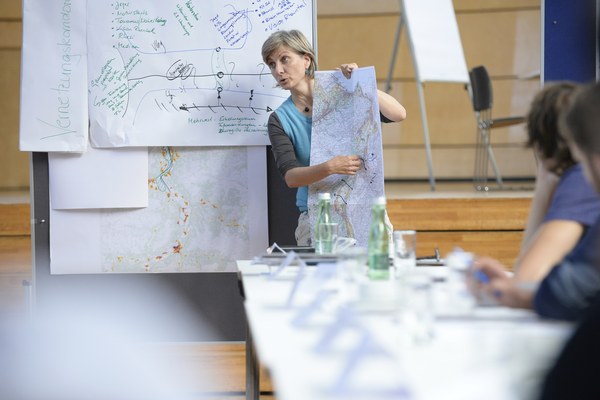
Our green lungs are running out of air
Animals and plants have to migrate in order to reproduce. That involves crossing land used by human beings. Ecological networking therefore needs the support of a variety of stakeholders. CIPRA brings them together.

Point of view: who will fill the macro-regional Alpine house with life?
Just as in the building of a house, the inhabitants are the most important persons involved in the Alpine macro-region. But, eight weeks after the start of the process, states and regions have yet to indicate to the representatives of civil society whether they may contribute. R.S.V.P.
Land for all
Fewer and fewer areas remain untouched by building development. Vorarlberg has therefore seen the establishment of the "Bodenfreiheit" (ground clearance) association, which is now successfully buying up land for public use.
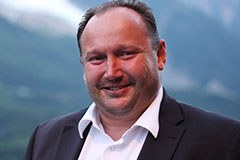
Alpine Convention: new Secretary-General takes office
Markus Reiterer began his new job on 1 July 2013 as Secretary-General of the Alpine Convention at the "Goldenes Dachl" in Innsbruck. The new head of the Permanent Secretariat talks about his aims.

Boost for the macro-region Alps
The European Union is publishing its first analysis of existing macro-regions - encouraging news for current developments in the Alpine space.
Macro-region: Europe goes a step further
The European Parliament has adopted a resolution on a macro-regional strategy, while the Alpine Space Programme submitted an expert report to the European Union.
CIPRA's point of view: Shaping the macro-region Alps according to the Alpine Convention - but better
Many people in the Alps are afraid of being marginalised by the surrounding metropolitan areas. But the expansion of the sphere of action and influence also offers numerous opportunities - if we rise to the challenge, CIPRA believes.
An Alpine "arms race": the desire for fun and games
Europe's highest suspension bridge is being opened in Switzerland, while an Austrian peak is getting a four-armed cross that is accessible to visitors - unbelievable adventures in the Alps.
CIPRA's point of view: New solidarity between the Alps and metropolitan areas
Various political actors are pushing for the development of a macro-region for the Alps. CIPRA also says yes to an Alpine macro-region - but only within a clear framework. This offers the opportunity to make the rest of Europe aware of the issues facing its Alpine regions.
The Alpine Region as a macro-region?
The EU already has a macro-region strategy for the Danube Region and the Baltic Sea. So why not also for the Alpine Region? At the beginning of July, the Arge Alp Working Group advocated a resolution calling for a "macro-region for the Alps".
Monitoring tool and strategies for regional development
The DIAMONT Interreg IIIB project (for Data Infrastructure for the Alps. Mountain Orientated Network Technology) came to an end with a conference in Innsbruck/A on February 1.
Negotiable land use certificates
Through the tool of the land use certificate (FNZ) the growing land consumption in Switzerland shall be limited. With the brochure "Recovering land - land use certificates in land planning" the environmental organisation Pro Natura wants to bring the discussion about this tool in the public arena.
Mountains and the modern age: innovative construction at high altitudes
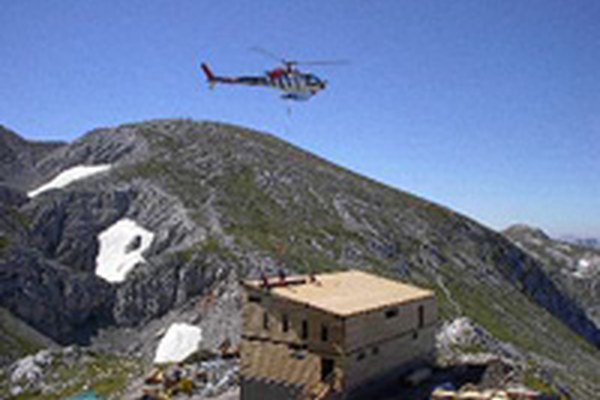
The Austrian Tourist Club [Österreichischer Touristenklub] recently opened the first high-alpine passive building, namely the Schiestlhaus am Hochschwab/A at 2,153 m.
Conference of Regions in Kranjska Gora/SI
On 24 October 2003 representatives of the seven pilot regions of the EU research project REGALP convened at the Conference of Regions for an exchange of experience at Kranjska Gora/SI.
Studies and conference on rail network extensions in the Alpine Rhine region
The A13/E43 network has commissioned a study in the border region between Germany, Switzerland, Austria and Liechtenstein with the following basic requirements for the future provision of public passenger transport services: Rail links to the large agglomerations in southern Germany and from the upper Rhine valley to the central areas of southern Germany and western Austria; expansion of the S-Bahn network in the region comprising eastern Switzerland, the eastern area of Lake Constance and the upper Rhine valley; development of tram/suburban railway systems such a half-hourly S-Bahn link between Feldkirch/A and Buchs/CH.